
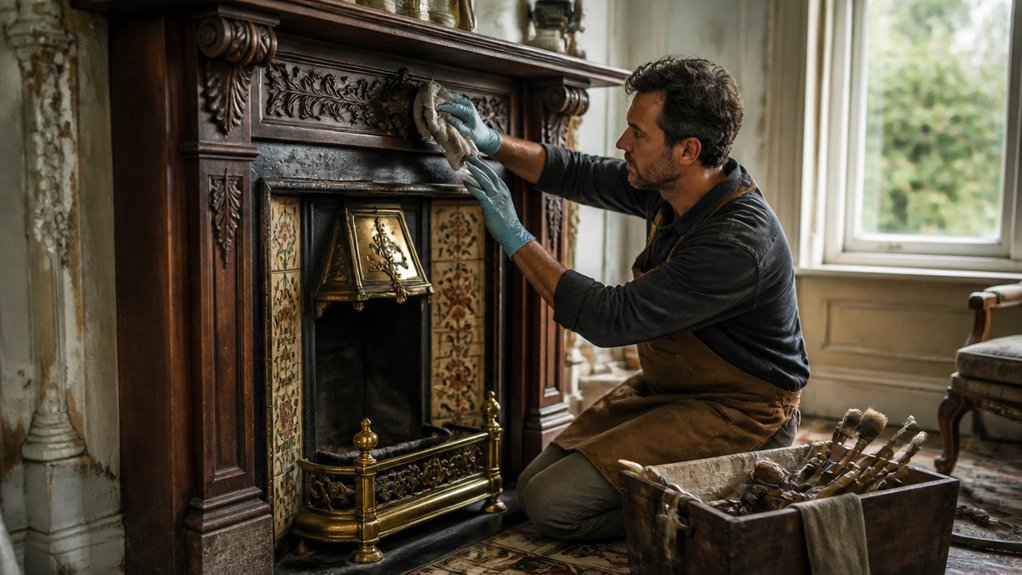

You may not realize that a Victorian fireplace’s original finish can be more vulnerable than the soot and grime covering it. Before you clean or repair anything, inspect the surround, hearth, and chimney to identify their materials, condition, and any safety concerns. The right restoration can preserve fine details while making the fireplace safe to use—but one common mistake can permanently erase the character you’re trying to bring back.
Inspect Your Victorian Fireplace
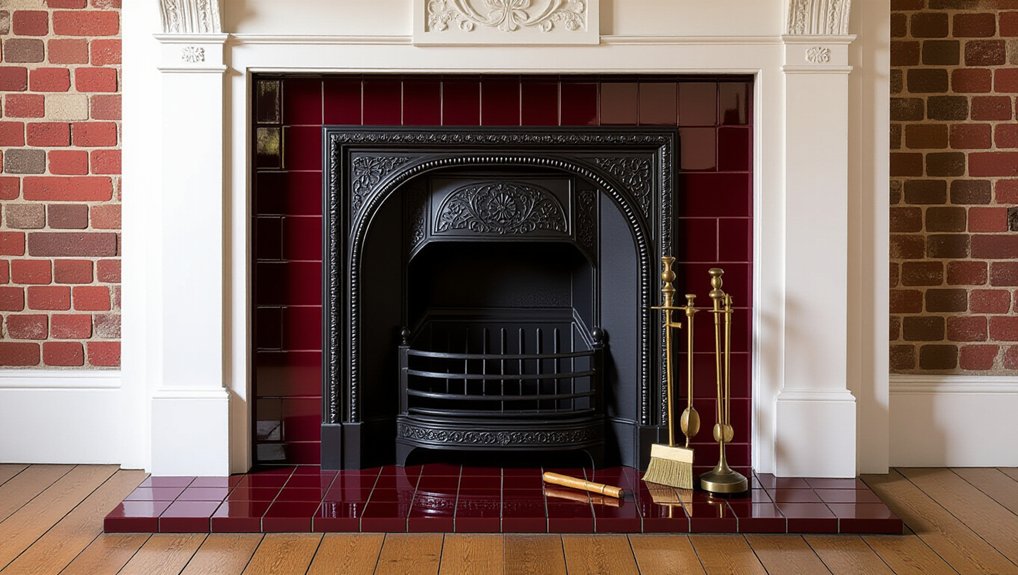
Before restoring your Victorian fireplace, inspect it carefully to understand its condition and identify any safety concerns. Look closely at the surround, hearth, firebox, and chimney opening. Note cracks, loose sections, missing pieces, damp patches, soot buildup, or signs of movement.
These problems can affect both appearance and stability, so don’t begin cosmetic work until you’ve assessed their extent.
Check whether the fireplace has been altered, blocked, or fitted with a modern appliance. Don’t light a fire to test it: hidden defects can release smoke or carbon monoxide.
Fire safety comes first, especially in homes with older flues. If you spot structural damage, persistent damp, or uncertain ventilation, ask a qualified professional to inspect the fireplace and chimney before use.
A careful assessment helps you plan repairs that respect Victorian architecture without overlooking hazards.
Identify Its Materials and Original Details
Once you’ve assessed the fireplace condition, identify what it’s made of and which features appear original. Look closely at reclaimed fireplace surrounds, the hearth, insert, and mantel. Victorian fireplaces commonly combine cast iron, marble, slate, tile, or timber; note each material and how components meet. Check the back of loose trim or an accessible edge for clues, but don’t remove fixed parts just to investigate.
Record the design details that define its character: tile patterns, mouldings, brackets, grates, and decorative motifs. Compare these features with period photographs or reputable reference sources to distinguish Victorian craftsmanship from later replacements. Look for consistent wear, matching finishes, and construction methods across adjoining pieces.
Photograph details and keep notes before planning repairs. This record will guide material choices and help preserve period authenticity.
Check for Lead, Asbestos, and Structural Damage
Before disturbing old finishes, test the paint for lead and arrange professional testing if results are positive.
Have suspected asbestos in tiles, insulation, or other materials assessed by a qualified specialist.
Check the fireplace and chimney for cracks, loose masonry, or movement, and consult a structural professional if you find damage.
Test for Lead Paint
Could your fireplace’s original paint contain lead? If your Victorian home predates 1978, assume painted surfaces may contain it until testing confirms otherwise. Don’t scrape, sand, or heat the finish: disturbing lead paint can release hazardous dust or fumes.
Instead, use an EPA-recognized lead test kit according to its instructions, or hire a certified lead inspector for reliable results. A professional can sample discreetly, helping you preserve original details while protecting your household.
If the test is positive, keep children and pets away, avoid dry cleaning, and don’t attempt removal yourself. Consult a certified lead abatement contractor about safe containment or stabilization.
Careful testing supports both Victorian aesthetics and historical accuracy, allowing you to plan restoration without damaging the fireplace’s character or exposing anyone to preventable lead hazards.
Check for Asbestos
Does your Victorian fireplace include old insulation, cement panels, or textured coatings? These materials may contain asbestos, especially if they were added during later renovations. You can’t identify asbestos reliably by sight, so don’t scrape, drill, sand, or remove suspect materials.
Disturbing them can release hazardous fibers into your home. Instead, stop work and contact a qualified asbestos professional to inspect and sample the material. Choose an accredited laboratory for testing, and follow the specialist’s advice about containment, removal, or leaving it undisturbed.
Don’t use a household vacuum or sweep debris if damage has already occurred; keep people away and seek professional guidance. Once the area is safe, document findings before planning restoration.
This protects your household while supporting Historical accuracy and informed Material sourcing for appropriate period repairs.
Assess Structural Damage
Once asbestos concerns are cleared, inspect the fireplace for structural damage before planning repairs. Check the firebox, hearth, surround, and chimney breast for cracks, loose bricks, crumbling mortar, damp patches, or signs of movement.
Pay particular attention to widening cracks and bulging masonry; these may indicate instability rather than cosmetic wear.
Don’t use the fireplace until you’ve confirmed the flue and structure are sound. If you find significant damage, stop work and consult a qualified fireplace specialist or structural engineer. They can assess the cause, recommend repairs, and determine whether the chimney needs support.
Include lead testing in your assessment, especially on painted surfaces and older fittings. Don’t sand or scrape suspect paint; arrange professional testing and removal.
These safety precautions protect you during restoration and support lasting fireplace maintenance. Document damage with photographs before repairs begin.
Clean the Fireplace Without Damaging Its Finish
Before cleaning a Victorian fireplace, identify its materials and finish: cast iron, brass, tile, and painted surfaces each need different care.
Start by removing loose soot and dust with a soft brush and a vacuum fitted with a brush attachment.
Test any cleaner on a hidden spot, then follow the manufacturer’s directions.
For cast iron, use a barely damp cloth and dry it promptly to prevent rust.
Polish brass only if its finish allows; abrasive products can strip patina or plating.
Wipe tile with mild, pH-neutral soap and water, avoiding harsh acids and scouring pads.
On painted areas, use a damp microfiber cloth and minimal pressure.
Modern cleaning products can help, but Eco friendly methods such as mild soap often suffice.
Never soak surfaces or mix cleaners; ventilate the room and wear gloves.
Repair Cast Iron, Tile, Stone, or Wood
Assess each damaged area before you repair it, since cast iron, tile, stone, and wood require different methods.
For cracked cast iron, stabilize loose sections and consult a specialist before welding; heat can warp delicate details. Cast iron restoration often works best with compatible metal fillers and careful, localized repairs.
For Victorian tile repair, secure loose tiles with suitable adhesive and replace missing pieces with period-appropriate matches. Don’t force intact tiles from their beds.
Repair chipped stone with a color-matched mineral filler, then smooth it gently to preserve the original profile.
For wood surrounds, tighten loose joints, fill small losses with a compatible wood filler, and use shaped inserts for larger damage.
Test materials in an inconspicuous spot first, and call a conservator when damage threatens structural stability or valuable original features.
Remove Paint Without Losing Original Details
After repairing the surround, identify the paint layers and the material beneath them before choosing a removal method. Test a small, inconspicuous area first; older coatings may contain lead, so use a certified professional if testing confirms it. Protect nearby surfaces, wear suitable protective equipment, and keep dust contained.
Choose a method suited to the substrate. On cast iron, a compatible chemical stripper can loosen paint without abrading raised ornament. On wood, stone, or tile, avoid aggressive scraping that can gouge grain, soften finishes, or chip edges. Use plastic tools and work patiently around moldings, joints, and carved details. Don’t use open flames or uncontrolled heat, which can damage materials and release hazardous fumes.
Careful Historical restoration preserves the craftsmanship central to Victorian design. Stop when original details emerge; don’t pursue a perfectly bare surface at their expense.
Choose Period-Appropriate Fireplace Finishes
Once the original surface is exposed, choose a finish that suits both the fireplace’s material and its period. For cast iron, you can apply a thin coat of stove polish or heat-resistant paint in a historically appropriate dark shade. Test an inconspicuous area first; heavy coatings can obscure fine detailing.
If you’ve uncovered stone or marble, clean it gently and use a compatible breathable treatment only when needed. Avoid glossy sealants that create an unnaturally modern sheen.
For timber surrounds, select a finish suited to the wood and its original appearance, such as wax or a restrained stain. Don’t strip away patina simply to achieve a uniform colour.
When evidence is limited, consult period photographs or a conservation specialist. A restrained, material-specific finish preserves Victorian charm and supports period authenticity without disguising the fireplace’s age.
Check the Chimney and Fireplace for Safe Use
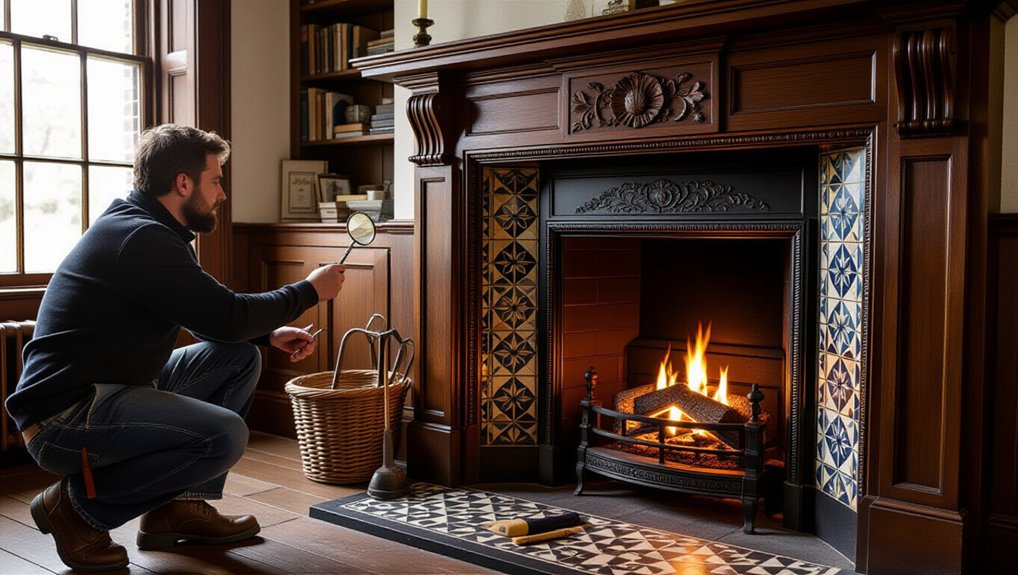
Before lighting a restored Victorian fireplace, have a qualified chimney professional inspect the flue, chimney, and firebox. Ask them to check for cracks, loose masonry, blockages, and signs of water damage. Creosote buildup can ignite, while a damaged liner may let heat and combustion gases reach nearby materials.
Confirm that the damper opens, closes, and seals properly, and that the chimney drafts effectively. Your professional can recommend repairs and determine whether the fireplace suits wood, gas, or another fuel. Don’t use it until required work is complete and the system passes inspection.
Make chimney maintenance part of your routine: schedule regular inspections and cleanings, especially after heavy use.
For fireplace safety, keep a suitable extinguisher nearby, use a sturdy screen, and never leave a fire unattended. Install working carbon monoxide and smoke alarms.
Style Your Restored Victorian Fireplace
Choose period-appropriate accessories, such as brass tools or a Victorian-style screen, to complement your restored fireplace.
Layer materials like wood, stone, and textiles for warmth, but keep the arrangement balanced.
Highlight original details—such as tilework or carved wood—rather than covering them.
Choose Period-Appropriate Accessories
To give your restored Victorian fireplace a cohesive, period-appropriate look, choose accessories that suit its age and style. Start with Antique accessories that reflect the room’s era, such as a brass fender, coal scuttle, or carefully selected fire tools.
Check each item’s scale: an oversized piece can overwhelm a modest mantel, while tiny objects may disappear against an elaborate surround. For Victorian décor, favor restrained groupings that complement the fireplace’s original details rather than compete with them.
A period clock, framed print, or small ceramic ornament can add character when its design and finish feel historically plausible. You don’t need a complete antique set; a few well-chosen pieces create a convincing impression.
Verify that functional accessories are safe and suited to your fireplace before using them. Keep the mantel uncluttered, and let its craftsmanship remain the focal point.
Layer Textures and Materials
Layering contrasting textures and materials gives your restored Victorian fireplace depth without obscuring its craftsmanship. Pair a smooth stone hearth with a woven wool rug, or balance polished metal accessories with a matte-painted wall. These contrasts create visual interest while keeping the fireplace grounded in its period character.
Layer textures thoughtfully: choose a restrained palette, then vary finishes and tactile qualities rather than introducing too many colors or patterns. A velvet cushion, linen drapery, or natural timber nearby can soften hard masonry and metal.
Keep furnishings clear of heat sources, and check manufacturer guidance before placing combustible materials near the fire.
Consider material durability as well as appearance. Select heat-resistant, easy-care surfaces for the hearth area, and use fabrics that can withstand regular cleaning. With a few well-chosen layers, you’ll create a comfortable setting that complements your restored fireplace without competing with it.
Highlight Original Details
If your fireplace retains its original tiles, ironwork, or carved mantel, make those features the focal point. Their Historical significance lies in the craftsmanship and materials that reflect your home’s period. Keep surrounding décor restrained so these details remain visible, and choose colors that complement—not compete with—the original palette.
Before styling, inspect each feature closely. Restoration challenges may include fragile glaze, loose fittings, or layers of paint that conceal decorative work. Don’t scrub, strip, or polish antique surfaces without confirming the safest method; consult a conservation specialist when damage or uncertainty warrants expert care. Use gentle cleaning and reversible treatments wherever possible.
You can add period-appropriate accessories, such as a simple fire tool set, but avoid crowding the hearth. By preserving and thoughtfully displaying original elements, you’ll give your restored fireplace character without compromising its authenticity.
Conclusion
With careful inspection, gentle cleaning, and skilled repairs, you can bring your Victorian fireplace back to life without erasing its history. Preserve original details, choose period-appropriate finishes, and have the chimney checked before lighting a fire. Then style the mantel with restraint: a few antique accents can make its craftsmanship shine. From cast iron to carved stone, each detail adds character. Treat your fireplace with patience and respect, and you’ll restore a safe, striking focal point that celebrates your home’s past.
These styles of fireplaces are perfect for a living room, a study or a reading room. They seem to add that ‘wow’ factor.