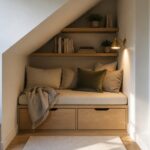
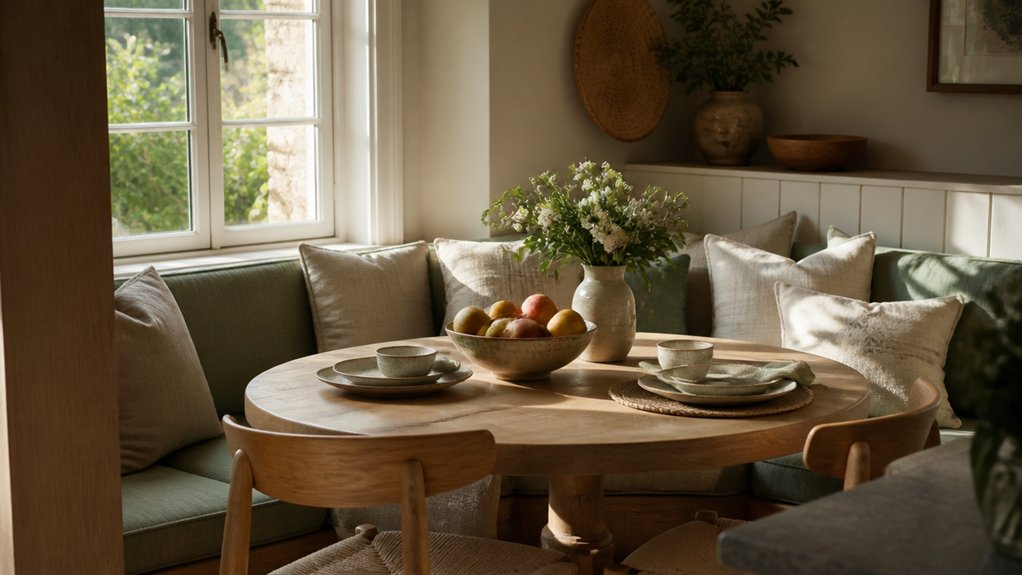

A well-planned breakfast nook gives your family a comfortable place to gather without wasting valuable space. Start by choosing a layout that suits your room, then balance comfortable seating and durable furniture with warm colors, practical storage, and layered lighting. Even a small corner can feel inviting when each detail serves a purpose. The right choices depend on how your family uses the space—and a few common layout mistakes can make all the difference.
Choose a Breakfast Nook Layout for Your Space
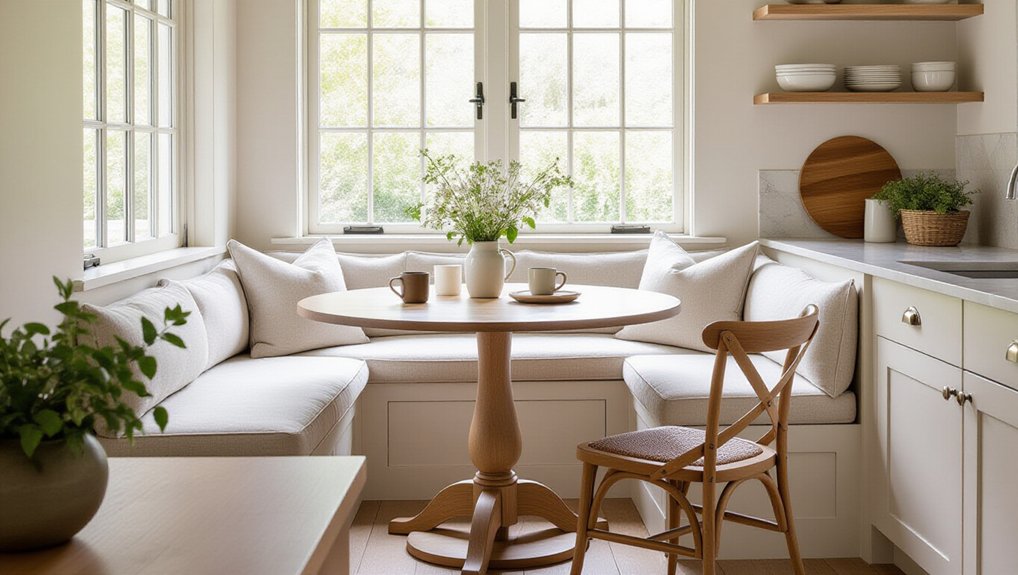
Start by measuring the available space and noting nearby doors, windows, and walkways. Choose a layout that preserves clear routes and suits how you’ll use the nook.
A compact square table works well in a corner, while a round table softens tight spaces and makes movement easier. If your nook sits along a wall, a narrow rectangular table can keep the footprint efficient.
Check that chairs can pull out without blocking doors or traffic.
Use windows to guide placement, not dictate it. Keep sightlines open, and consider custom window treatments to manage glare without sacrificing daylight.
Balance the arrangement with statement wall art, scaled to the wall and table.
Before committing, mark the furniture footprint with painter’s tape. This simple test helps you confirm the layout feels comfortable and practical.
Make Banquette Seating Fit Your Nook
Once you’ve settled on a layout, fit the banquette to the nook’s dimensions and traffic flow. Measure each wall, then account for table clearance and the space you need to pull chairs out or walk past.
A built-in bench can follow a corner or window wall, while a freestanding option offers more flexibility if your needs change.
Plan the seating arrangement around how your family uses the nook. Allow enough room for each person to sit and get in and out without disturbing others.
Keep the table centered over the bench, and avoid blocking doors, drawers, or nearby pathways.
Before installation, check that the bench’s depth and height work with your table.
Leave access to outlets and storage, and choose a design that makes banquette maintenance straightforward, especially beneath the seat and along the wall.
Choose Durable, Comfortable Nook Furniture
Because breakfast nook furniture gets daily use, choose pieces built to handle frequent meals and easy cleanup. Select a table with a sturdy base and a finish that resists scratches, heat, and spills. Rounded corners can make movement safer in a tight space, while a pedestal base gives you more legroom.
For chairs, check seat height, back support, and weight capacity before buying; you’ll want everyone to sit comfortably through a full meal. Choose wipeable upholstery or removable covers, especially if children eat here.
Measure the nook and allow enough clearance to pull chairs out without blocking walkways or access to kitchen appliances. If you store outdoor accessories nearby, keep furniture dimensions and traffic flow in mind.
Test chairs in person when possible, and prioritize solid construction over decorative details that won’t improve everyday use.
Add Warm Colors and Cozy Textures
After choosing durable furniture, use color and texture to make the nook feel inviting. Build a warm color palette with soft terracotta, muted gold, creamy white, or earthy green.
You can repeat one shade in cushions, a table runner, and nearby wall art to create a connected look without making the space feel busy.
Choose washable fabrics for seats and cushions, especially if your family eats here daily.
Add texture contrast with a smooth wooden table, woven placemats, and a nubby cushion or upholstered bench.
A small rug can soften hard floors, but pick a low-pile, stain-resistant style that’s easy to clean.
Keep patterns modest, and balance tactile details with plain surfaces.
This approach gives your nook warmth and character while keeping it practical for everyday family dining.
Brighten Your Breakfast Nook With Layered Lighting
Layer ambient, task, and accent lighting so you can brighten every part of your breakfast nook.
Choose dimmable fixtures to adjust the light for meals, reading, or relaxed mornings.
Warm bulbs create a welcoming glow without harsh glare.
Layered Light Sources
A well-lit breakfast nook needs more than a single overhead fixture. Layering light lets you adapt the space for meals, homework, and relaxed conversation.
Start with ambient lighting from a ceiling fixture or recessed lights to spread even illumination across the nook. Then add task illumination where you need focused visibility, such as a pendant over the table or a wall-mounted reading light beside a banquette.
For an ambient accent, use a small lamp on a nearby shelf or a discreet strip beneath cabinetry to highlight architectural details without competing with the main fixtures.
Choose locations carefully: hang pendants high enough to preserve sightlines, and position lights to limit glare on tabletops.
Warm Dimmable Glow
Once you’ve chosen where each light belongs, use warm, dimmable bulbs to fine-tune the nook’s mood. Choose bulbs around 2700K to create a soft, welcoming glow that flatters food and skin without making the space feel dim.
Put overhead fixtures on a dimmer, and use separate controls for sconces or a nearby lamp so you can adjust each layer independently. Brighten the lights for breakfast prep, homework, or cleaning; lower them for relaxed dinners and quiet coffee.
This flexible ambient lighting supports practical tasks while offering easy mood enhancement throughout the day. Check that every bulb works with its dimmer to prevent flickering or buzzing.
If you use smart bulbs, set simple presets for common routines, then adjust brightness as daylight changes.
Add Storage for Easy Breakfast Cleanup
To keep breakfast cleanup quick, build storage into your nook where dishes and everyday essentials are easy to reach. Choose a bench with lift-up seats or deep drawers to hold placemats, napkins, and serving pieces. Keep frequently used items near the table so you can put them away without crossing the kitchen.
Open shelves can display mugs and bowls, while closed cabinets hide less attractive supplies and reduce visual clutter. Use labeled bins to group lunch bags, snacks, or reusable containers, and leave a clear spot for items that need washing.
These storage solutions make your nook work harder without sacrificing comfort. For practical cleaning tips, select wipeable finishes, store a small cloth nearby, and return each item to its designated place after breakfast. A tidy setup makes daily cleanup faster.
Conclusion
A well-planned breakfast nook can turn everyday meals into the warm heart of your home. Choose a layout that makes room to move, seating that welcomes lingering, and durable finishes that stand up to family life. Then soften the space with earthy colors, tactile textiles, layered light, and handy storage. Think of each detail as a thread in a cozy fabric: practical on its own, inviting together. Start with what your nook needs most, and let comfort grow from there.