
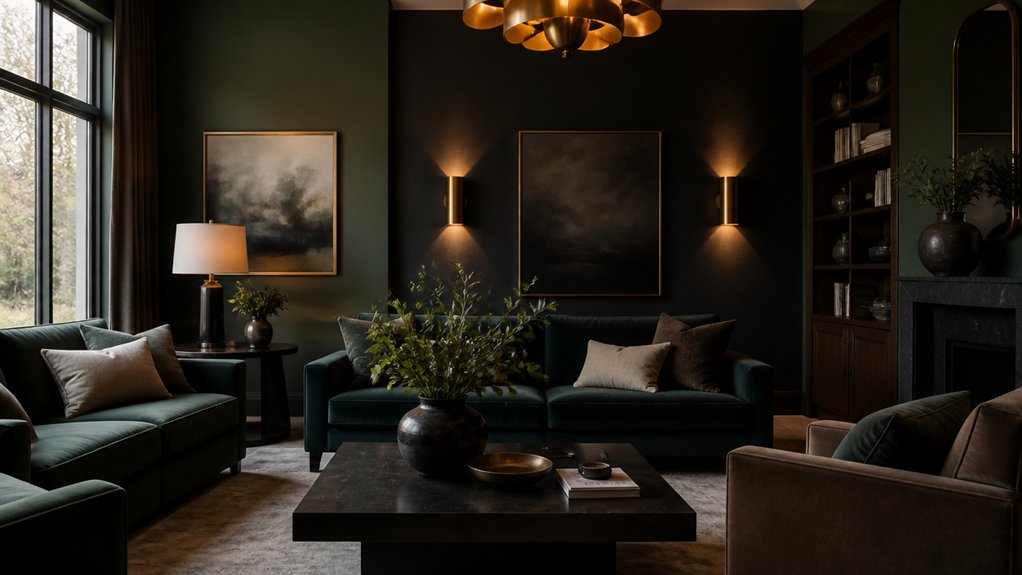

A dark wall can turn a room’s quietest feature into its defining statement. When you choose the right shade, you add depth, draw attention to architectural details and create a more intimate mood without sacrificing sophistication. The effect depends on more than colour alone: light, furnishings and finish all shape how the paint feels in your space. Before you commit, consider where dark paint will work hardest—and what can make it feel just right.
Choose Dark Paint Colours for Your Room
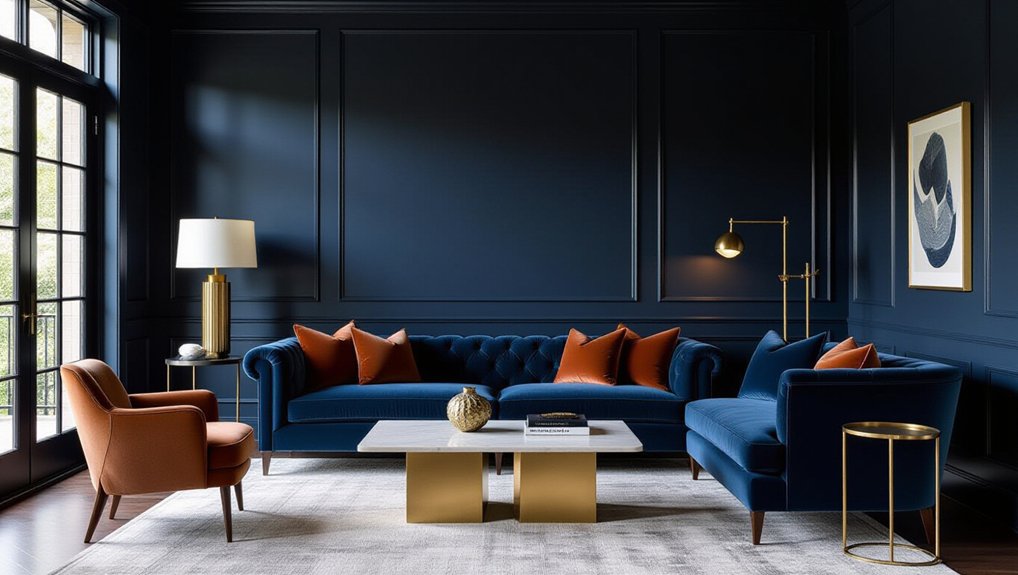
Dark paint can make a room feel intimate and polished, not necessarily smaller. Choose a shade that suits how you use the space and the mood you want to create. Color psychology offers a useful guide: deep blue can feel composed, forest green grounded, and charcoal quietly refined.
Test samples on more than one wall, then check them in daylight and under your evening lights before committing.
Consider the room’s fixed elements, including flooring, furniture, and trim, so your chosen color feels deliberate rather than disconnected. Your paint finishes matter, too. Matte paint softens walls and hides minor flaws, while satin or eggshell finishes are easier to clean in busy rooms.
Use a finish that matches your maintenance needs, and carry the color across adjoining surfaces for a cohesive, considered result.
See How Dark Paint Adds Depth
Dark paint can create visual depth by making walls recede and drawing your eye into the room. Use it strategically to enhance dimension, especially on an accent wall or in a space with strong natural light.
You’ll get the best effect when you balance deep hues with lighter furnishings and finishes.
Create Visual Depth
When you want a room to feel deeper, use dark paint to make a wall recede and give lighter furnishings more definition. Choose a saturated shade for a focal wall, alcove, or the area behind a bookcase; these placements create a clear visual anchor without overwhelming the room.
Pair the paint with pale upholstery, artwork, or shelving so each element stands out. Texture contrast strengthens the effect: combine a matte finish with polished metal, woven fabric, or natural wood to keep the dark surface from feeling flat.
Consider color psychology, too. Deep blue can feel calm and grounded, while charcoal brings quiet formality. Test paint samples in changing daylight before committing, since shadows and nearby colors can shift how a shade reads.
Keep trim crisp to sharpen edges and preserve definition.
Enhance Room Dimension
To enhance a room’s dimension, use dark paint to make one wall seem farther away while lighter surfaces appear closer. This contrast can visually reshape a narrow room, shorten an overly long space, or give a high ceiling a more intimate feel. Choose the wall strategically: painting the far end of a long room creates a stronger sense of balance, while a dark side wall can add definition without closing in the space.
Consider Color psychology as you select a shade. Deep blue or green can feel calm and grounded; charcoal adds crisp sophistication. Test samples in changing daylight and evening light before committing, since lighting shifts how dark paint reads.
Check paint durability, too, especially in busy areas, and choose a washable finish so your dimensional accent stays polished.
Use Lighting to Warm Dark Paint Colours
Lighting can make a dark paint colour feel inviting rather than cold. Consider how Color psychology shapes your response: a deep shade may feel cocooning, but harsh illumination can make it seem stark. Thoughtful lighting design helps you control that effect throughout the day.
Start with warm-white bulbs, around 2700 to 3000 kelvins, to soften dark walls without distorting their character. Add layered light: use ceiling fixtures for general illumination, then place lamps or wall lights where you read, work, or unwind.
Aim light toward the walls to reveal their depth and reduce shadowy corners. Dimmers give you finer control, letting you adjust brightness as natural light changes. Before committing, test bulbs in the room at different times.
Your paint’s undertone and the light’s warmth work together, so judge the result after dark, too.
Pair Dark Walls With Furniture and Finishes
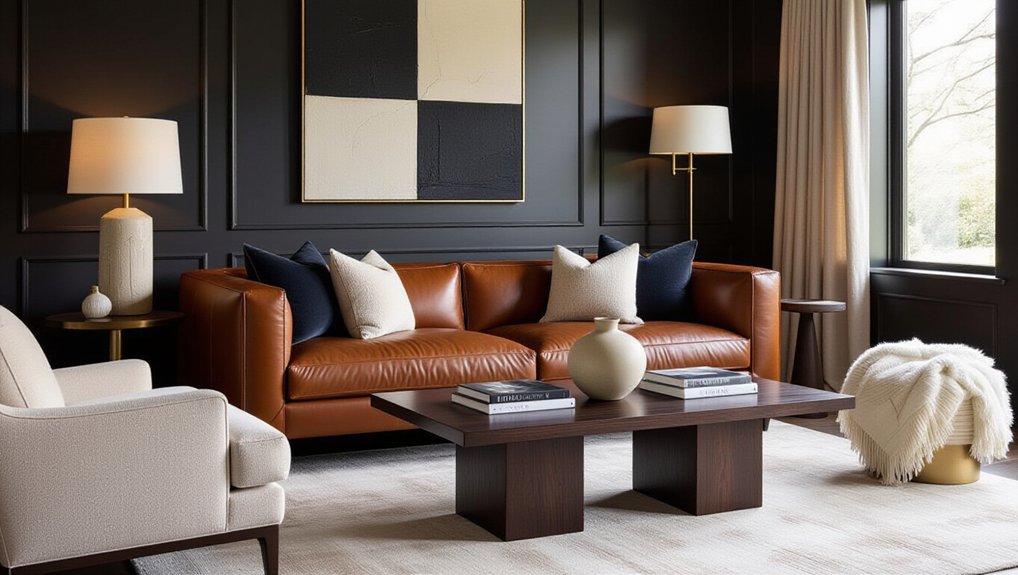
Dark walls create a strong backdrop, so balance their depth with furniture and finishes that add contrast or reinforce a deliberate, moody palette. Pair deep green with warm wood and aged brass for a grounded, collected feel, or set charcoal against pale upholstery and polished nickel for crisp definition.
Your choices shape the room’s mood: Color psychology can help you decide whether you want a calming retreat, a confident gathering space, or a more intimate setting. Consider historical influences, too; dark paint with antique timber, traditional patterns, or patinated metal can evoke heritage without feeling dated.
Repeat one or two finishes across the room to create cohesion, then vary textures—linen, leather, velvet, or stone—to keep the scheme layered. Choose furnishings that complement the wall color rather than compete with it.
Make Dark Paint Work in Small Rooms
Even in a small room, dark paint can create a sense of depth rather than make the space feel cramped. Choose a rich, muted shade and carry it across walls and trim to blur boundaries and make the room feel more cohesive.
Color psychology can guide your choice: deep green or blue often feels calming, while charcoal adds quiet sophistication. Balance the enveloping colour with clear sightlines, uncluttered surfaces, and well-placed lighting; a mirror can reflect light without making the scheme feel busy.
Consider paint textures, too. A soft matte finish can disguise minor wall flaws and absorb glare, while a subtle eggshell sheen helps bounce light around.
Keep the ceiling lighter if you want more visual height, or paint it dark to create a cosy, intimate atmosphere.
Test Dark Paint Before Choosing Surfaces
Before committing to a dark paint color, test it on the surfaces you plan to paint. Apply generous sample patches to the actual walls, cabinetry, or trim, rather than relying on a small paper swatch. The same shade can look dramatically different across materials and textures.
Observe each sample in morning, afternoon, and evening light, with your usual lamps switched on. Dark pigments shift with changing illumination, so a color that feels warm and enveloping at noon may appear cool or nearly black after sunset. Consider color psychology, too: notice whether the shade makes the room feel restful, focused, or intense.
Test the intended paint finishing alongside the color. Matte, eggshell, and satin finishes reflect light differently and can alter perceived depth. Live with samples for several days before deciding.
Decide Where to Use Dark Paint Colours
Choose an accent wall to add depth without making the whole room feel dark. Use rich paint in intimate spaces, such as a study or powder room, where a cozy mood suits the room’s purpose.
Consider the room’s light and how you want it to feel before you commit.
Accent Walls
Where should a dark accent wall go? Choose a surface that naturally draws your eye, such as the wall behind a bed, sofa, or dining table. You’ll give the room a clear focal point without making every wall compete for attention.
Check how daylight and lamps fall across the surface; shifting light can change a dark shade’s appearance throughout the day.
Use Color contrast to make the feature stand out: pair deep paint with lighter surrounding walls, furnishings, or artwork.
Consider Texture variation, too. A matte finish can soften a bold hue, while painted panelling adds depth and definition.
Before committing, sample the color on the intended wall and view it at different times.
Keep nearby accents restrained so the wall feels deliberate, not busy.
Intimate Spaces
Dark paint works especially well in intimate spaces, where it can make a room feel cozy and contained. Consider a study, reading nook, powder room, or dining room—places where you want a sense of retreat rather than openness.
Deep hues can visually soften boundaries, especially when you paint the walls, trim, and ceiling in related shades. To keep the room from feeling heavy, balance dark colour with thoughtful lighting. Add sconces, table lamps, or dimmable fixtures to create ambient atmospheres that suit the space’s purpose.
Then introduce contrast through pale artwork, reflective accents, or natural materials. Velvet, wool, and timber bring luxury textures that enrich the palette without competing with it.
Test samples in changing light before committing, and choose a finish that suits the room’s use and upkeep needs.
Conclusion
Dark paint may seem bold, but it can make a room feel more inviting than a pale, predictable palette. Choose a shade that suits your space, test it in changing light, and balance its depth with warm lighting, tactile finishes, and furnishings you love. Use it across a whole room or on one considered feature; either way, you’ll create contrast without clutter. With thoughtful choices, dark colour doesn’t shrink your home—it gives it character, intimacy, and lasting sophistication.