
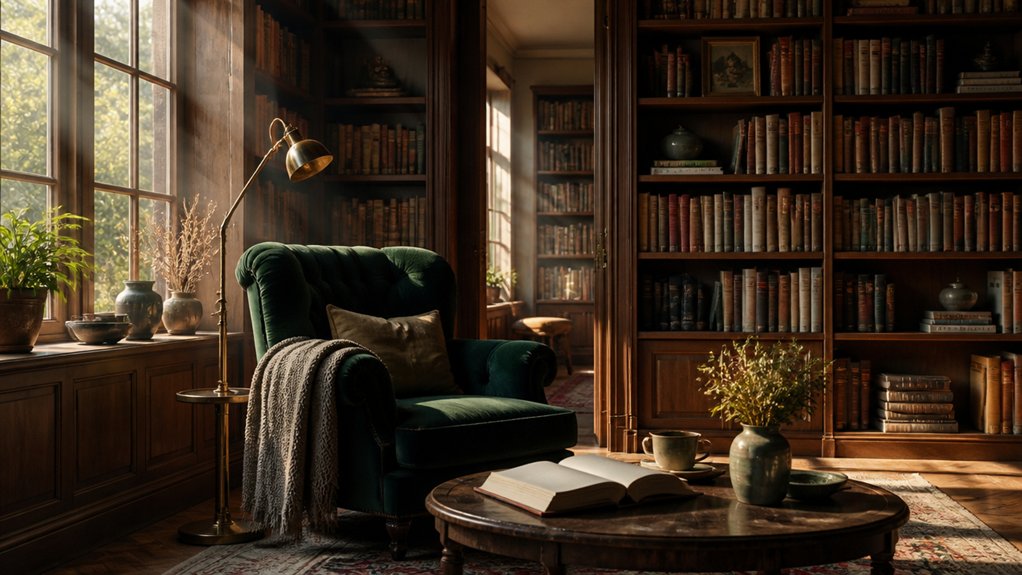

A well-planned home library gives your books a place to grow and you a comfortable spot to unwind. Start by evaluating your available space, then consider adjustable shelves, supportive seating, and layered lighting to suit how you use the room. Even a small corner can feel spacious when you keep pathways clear and storage purposeful. The right details depend on your collection, your habits, and one often-overlooked design choice.
Plan Your Home Library Around Your Space
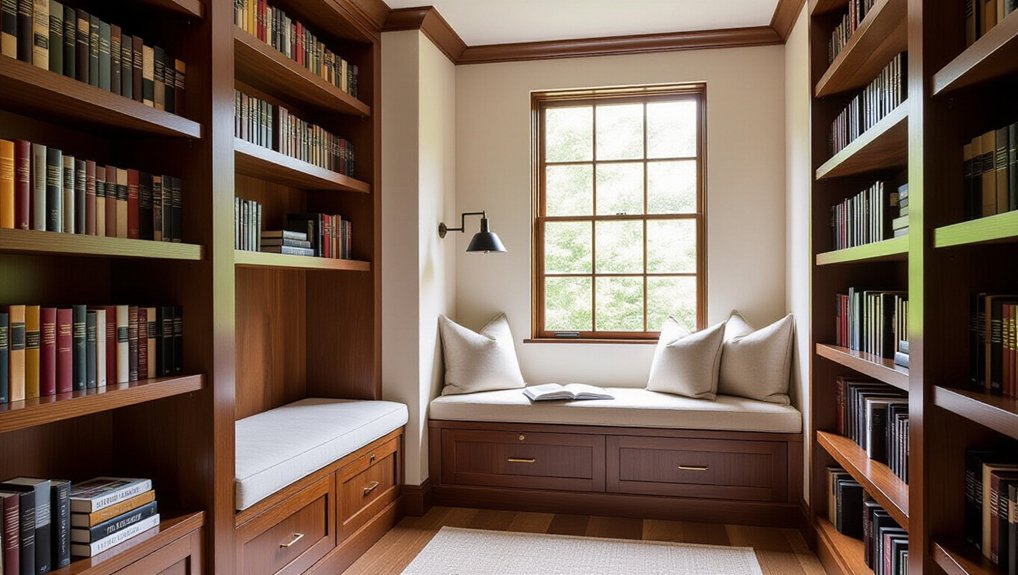
Before choosing shelves or furniture, measure the space you have and note its limits, such as low ceilings, narrow walkways, or uneven walls. Record wall lengths, ceiling height, and door swings so you can select pieces that fit without blocking access.
Decide how many books you need to store, then plan a book arrangement by grouping titles by size, subject, or frequency of use. This helps you estimate shelf capacity and choose adjustable shelves for changing collections.
Check the floor’s condition and locate outlets before placing a reading lamp or device.
Consider how the room connects to nearby spaces, too: a door, rug, or bookcase can help manage ambient sound.
Set a realistic budget for shelving, seating, lighting, and installation, and prioritize sturdy, well-fitted pieces over decorative extras.
Make a Small Reading Room Feel Spacious
Once you’ve planned for the room’s dimensions, use a few space-conscious choices to make it feel more open. Keep the floor clear by choosing a compact chair with exposed legs, then add a small side table instead of a bulky coffee table. Position the chair near a window to draw your eye outside and bring in natural light.
Hang a mirror opposite the window to reflect daylight and visually expand the room. Choose a light, consistent color palette for walls, trim, and textiles; a few darker details can add definition without making the space feel crowded.
Use decorative wall accents sparingly, such as one framed print or a narrow picture ledge. For ceiling height enhancements, hang curtains close to the ceiling and let them fall to the floor.
Keep pathways open so you can move comfortably.
Choose Bookshelves for Your Book Collection
Measure your wall height, width, and depth before you choose a bookshelf, and note any doors, windows, or vents that affect placement.
Then match shelf capacity and spacing to your collection, including oversized books and room for future additions.
This helps you choose storage that fits your space without crowding it.
Measure Your Space
Start with the space, not the shelves: measure the wall’s width and height, then note baseboards, outlets, windows, doors, and nearby furniture that could limit placement. Record each measurement in inches, and check the full span where a bookcase might sit.
Measure furniture nearby, too, so you can preserve comfortable walkways and avoid blocking drawers or doors.
For layout optimization, sketch the room and mark fixed features, traffic paths, and any clearance needed to open windows or reach outlets.
Check ceiling height and measure from the floor, accounting for uneven surfaces or sloped ceilings.
If you’re considering a corner, measure both adjoining walls and note the angle.
Keep your notes handy when comparing shelf dimensions; a few careful checks now can prevent awkward gaps, cramped access, or a piece that won’t fit through the doorway.
Match Your Collection
Choose bookshelves to suit the books you own, not just the look you want. Check your collection’s height, depth, and weight before you buy. Oversized art books and tall hardcovers need deeper shelves and more vertical clearance than paperbacks. If you own many heavy volumes, choose sturdy shelves with solid construction and supports that won’t sag under load.
Adjustable shelves help you accommodate changing formats, while closed cabinets protect valuable editions from dust and sunlight. Open shelving makes titles easy to scan and supports quick access.
Consider your reading habits, too: keep current reads and reference books within reach, and place less-used titles higher or lower.
Plan for growth by leaving some empty space. A little room to expand keeps book organization manageable and prevents shelves from looking crowded.
Pick Comfortable Seating for Long Reading Sessions
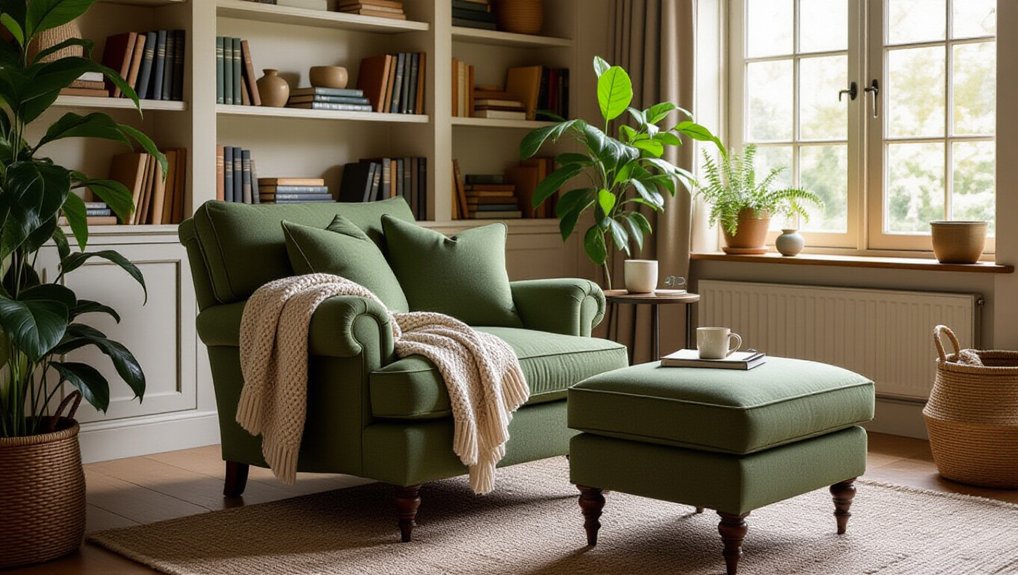
For long reading sessions, pick a chair that supports your lower back and lets your feet rest flat on the floor. Check the seat depth, too: you should be able to sit back without pressure behind your knees.
Plush armchairs feel inviting, but choose one with firm support rather than a seat that lets you sink too far. Add ergonomic cushions if you need extra lumbar support or a softer surface, and adjust them so they stay in place as you shift.
Think about how you read. If you often hold a book open, select arms at a comfortable height to support your elbows.
A footstool can ease pressure on your legs, while an adjustable chair helps you change position. Before buying, sit in the chair for several minutes and test its support.
Layer Warm Lighting in Your Reading Room
Choose warm bulbs around 2700K to create a comfortable glow that won’t strain your eyes.
Layer a ceiling fixture with a focused reading lamp and softer accent lighting.
You’ll get even illumination and can adjust each source to suit the time of day.
Choose Warm Bulbs
Because cool, harsh light can make a reading room feel clinical, build a warmer glow with bulbs around 2700K to 3000K. This range gives your shelves and furnishings a soft ambient color while keeping printed pages comfortable to read. Check the bulb’s color temperature on its packaging; “warm white” usually falls within this range, but labels vary.
Choose a high color-rendering index (CRI 90 or higher) to reveal book-cover colors and wood tones accurately. For energy efficiency, select LED bulbs, which use less electricity and last longer than incandescent options.
Match bulb brightness to the fixture’s rating, and avoid exceeding its maximum wattage. If you use a dimmable bulb, confirm that it’s compatible with your dimmer to prevent flickering or uneven performance.
Layer Multiple Light Sources
Warm bulbs set the tone, but layering light makes a reading room work for different tasks and times of day. Start with ambient lighting from a ceiling fixture or shaded floor lamp to brighten the whole space evenly.
Then add task illumination beside your favorite chair: an adjustable reading lamp lets you direct light onto the page without casting harsh glare. If you read at a desk, choose a lamp with a movable arm and position it opposite your writing hand to reduce shadows.
A small table lamp on a shelf or side table can soften dark corners and make the room feel inviting after sunset. Put fixtures on separate switches or dimmers, so you can adjust brightness as daylight changes.
Keep bulbs warm and consistent for a calm, comfortable glow.
Create a Cozy Home Library Reading Nook
A cozy reading nook gives your home library a comfortable place to pause with a book. Choose a quiet corner near your shelves, but leave enough room to move around easily. Measure the space before selecting Reading nook furniture, so a chair won’t block a doorway or crowd nearby bookcases.
Pick a seat with firm support, a cushioned back, and enough depth to sit comfortably for a full chapter. Add a small side table within reach for your current book and a drink. If you share the room, define the nook with a compact rug or a low bookcase that separates it without closing off the area.
Use Book storage solutions that keep frequently read titles close at hand, while preserving clear pathways and a tidy, functional layout.
Add Personal Decor and Book Displays
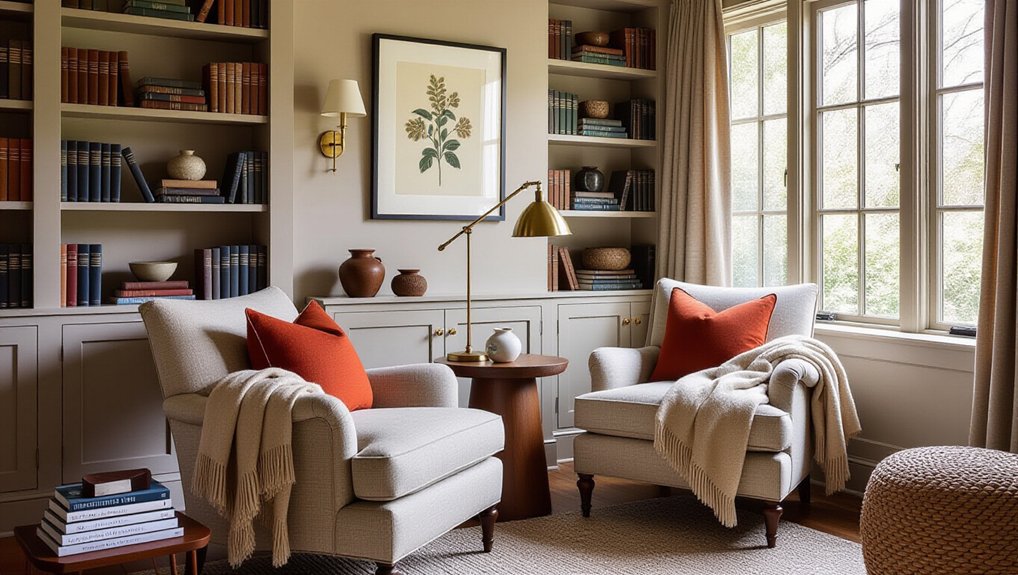
Personal decor and thoughtful book displays make your home library feel distinctly yours without adding clutter. Choose a few meaningful objects, such as a framed print, a small sculpture, or a travel souvenir, and group them with books on a shelf. Vary heights and leave breathing room so each item remains visible and easy to dust.
Create personal book displays by arranging titles around a theme, color, author, or upcoming read. Use bookends to keep stacks stable, and place frequently borrowed books within reach.
For decorative shelving, mix open shelves with a cabinet or baskets to balance display and storage. Keep heavier volumes on lower shelves, and avoid overcrowding; packed shelves can look busy and make books harder to remove.
Rotate featured objects and titles seasonally, giving your library a fresh look without buying more decor.
Conclusion
Your home library doesn’t need a grand room—just thoughtful choices that make reading easy and inviting. Arrange adjustable shelves to fit your collection, keep pathways clear, and pair supportive seating with layered, warm lighting. Add a small rug, useful storage, and a few personal displays to make the space feel like yours. Start with one cozy corner, then build around it: your books will find their place, and you’ll find a reason to linger.