
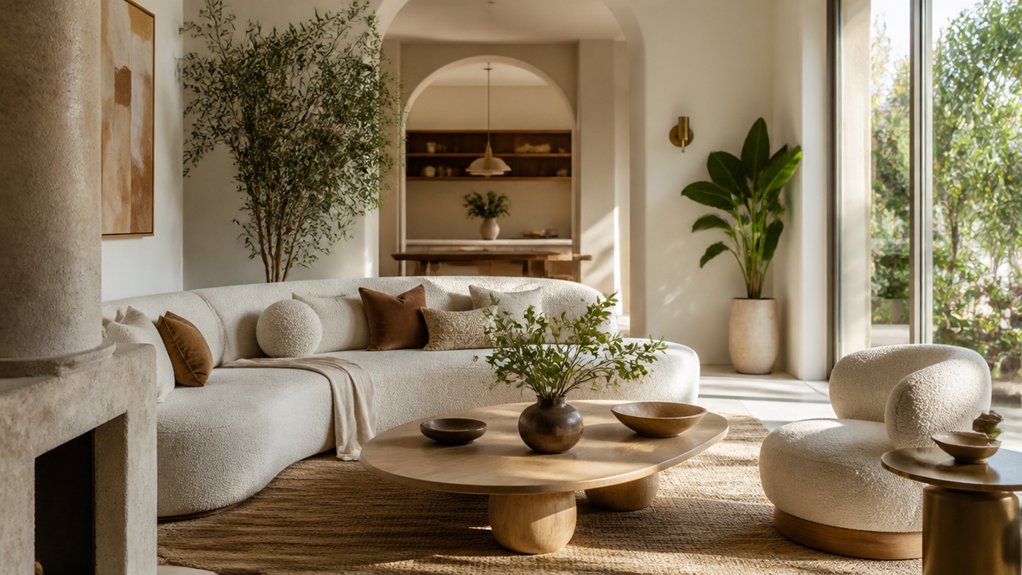

A well-designed home is like a steady compass: it helps you feel grounded while life keeps changing. Today’s most popular interior design trends bring that balance through natural materials, earthy colors, flexible layouts, and thoughtful technology. You can create rooms that feel warm and personal without sacrificing function or lasting appeal. But the details that make these choices work together may be less obvious than they seem.
Which Natural Materials Warm Up Modern Homes?
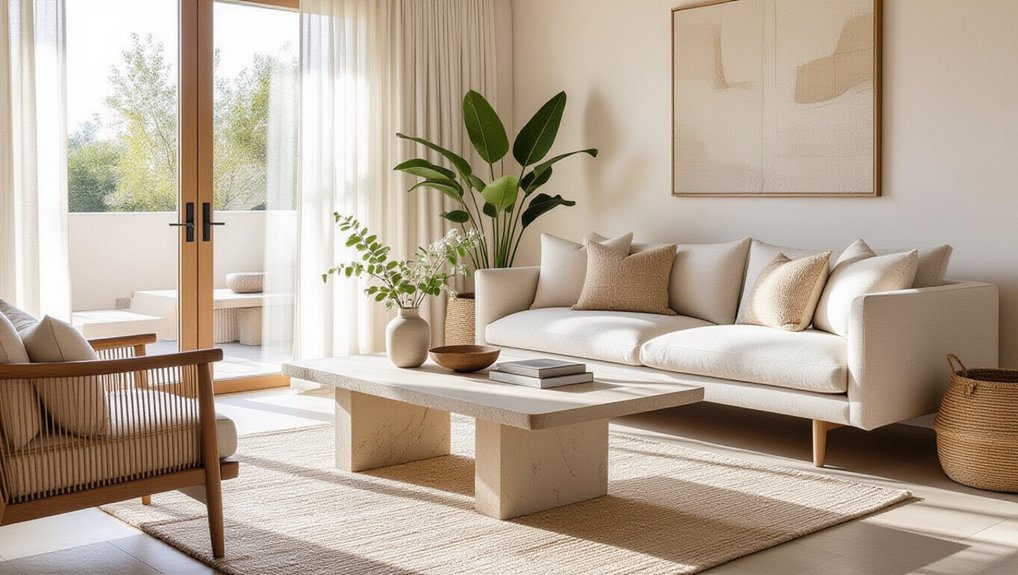
Natural materials soften modern interiors without sacrificing their clean lines. Choose oak, walnut, or ash for floors, cabinetry, and furniture; their visible grain adds warmth while keeping rooms grounded. If you prefer a lighter touch, bring in linen curtains, wool rugs, or cotton upholstery. These fibers soften hard surfaces and make everyday spaces feel more comfortable.
Use stone strategically: a limestone countertop, slate hearth, or marble side table can add lasting character without overwhelming a restrained palette. Pair these elements with eco-friendly finishes, such as low-VOC oils and water-based sealants, to protect surfaces while reducing indoor pollutants.
Layer organic textures through woven baskets, jute rugs, and handmade ceramics. You’ll create depth by mixing materials thoughtfully, not by filling every surface. Let each natural detail serve a practical purpose, too.
Why Do Earthy Colors Still Feel Fresh?
Earthy colors bring nature-inspired warmth into your home without overwhelming modern lines. Their muted tones pair easily with changing styles, so you can refresh accents without reworking the whole room.
Choose shades that complement your materials and light for a look that feels both current and lasting.
Nature-Inspired Warmth
As homeowners seek spaces that feel calm without looking dated, warm tones drawn from soil, wood, and stone offer lasting appeal. Nature-inspired warmth comes from more than color: you can layer tactile materials and forms to make a room feel grounded.
Pair clay or ochre walls with timber furniture, woven fibers, and botanical textures, keeping finishes varied but coordinated. Organic shapes in a ceramic lamp or rounded table soften sharper architectural lines without making the space feel busy.
To keep the palette fresh, balance deeper earth tones with daylight, pale neutrals, or a restrained accent in green. Test paint and fabric samples in your room’s changing light before committing; warm shades can shift noticeably throughout the day.
Choose a few natural elements with intention, and your space will feel welcoming, not themed.
Timeless Versatility
Because earthy colors echo materials found in nature, they feel familiar without being tied to a passing style. Their staying power comes from flexibility: you can pair clay, olive, sand, or brown with changing furniture and finishes without rebuilding your palette.
Historical influence also explains their appeal. These shades appear in traditional crafts, architecture, and regional materials, giving your rooms a sense of continuity rather than nostalgia.
To keep them fresh, balance warm hues with crisp whites, charcoal, or muted blue, and vary textures through linen, wood, stone, and metal.
Artistic expression matters, too: a restrained base lets your artwork, textiles, and personal objects stand out.
Choose undertones that suit your natural light, then repeat each shade thoughtfully.
You’ll create a grounded interior that adapts as your taste evolves.
How Can Curved Furniture Soften a Room?
Curved furniture softens a room by breaking up the hard lines of walls, windows, and boxy furnishings. A rounded sofa or oval coffee table introduces movement, helping your space feel less rigid and more welcoming. Elegant curves can also guide the eye naturally through a room, creating visual flow without adding clutter.
Choose pieces with Soft silhouettes to balance angular architecture or a square-edged dining set. You don’t need to replace every straight-lined item; one curved accent chair or a circular side table can make a noticeable difference.
Consider scale before you buy: a broad, rounded sofa may overwhelm a compact room, while a slim curved chair can add softness without crowding it. Pair curves with tactile fabrics and warm finishes to emphasize their inviting shape, and keep surrounding pieces simple so each form stands out.
How Can Flexible Layouts Keep Up With Daily Life?
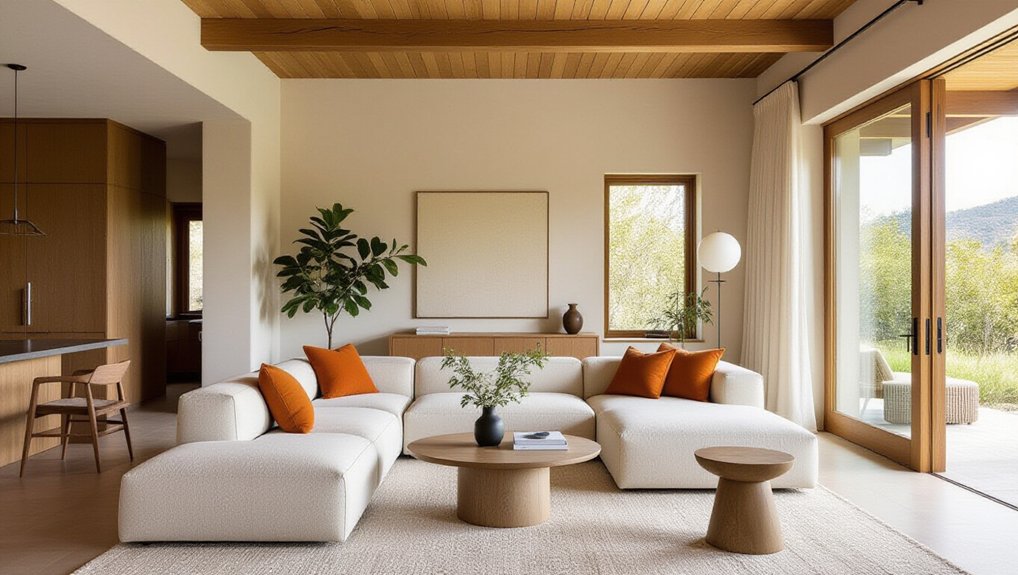
Choose adaptable furniture that shifts with your needs, from expanding tables to movable seating.
Design multiuse spaces so one room can support work, meals, and relaxation without feeling cluttered.
Keep pathways clear and furniture easy to rearrange, and you’ll move between daily activities with less effort.
Adaptable Furniture
Adaptable furniture lets your home shift smoothly from one task to the next. Choose pieces that respond to changing routines without demanding a full room rearrangement. Convertible sofas give you a comfortable place to sit by day and an extra bed when guests stay overnight. Before buying, check how easily the mechanism operates and whether the open configuration fits your floor plan.
Modular shelving lets you adjust storage as your needs change. Add or remove sections, reposition shelves, and keep frequently used items within reach. For either option, measure carefully, including clearance for doors, drawers, and walkways.
Favor durable materials and simple designs that work with your existing decor. When each piece earns its space and adapts reliably, you’ll spend less time reorganizing and more time enjoying a home that supports your daily habits.
Multiuse Spaces
Flexible layouts help one room serve several purposes as your daily routine changes. You can use a living area for work, exercise, or family time by defining distinct zones with rugs, lighting, and carefully placed furniture.
Start by listing the activities your household needs to accommodate, then assign each a practical footprint. Keep frequently used items close to their zones, and choose creative storage that makes supplies easy to reach without crowding the room.
A desk beside a bookcase, for example, can support focused work while preserving space for relaxation.
If several people share the room, consider privacy solutions such as a folding screen or sound-absorbing panels.
Review the arrangement as your schedule shifts; a layout that reflects real habits will feel more comfortable and function better than one designed for appearances alone.
Easy Room Transitions
When your routine shifts, a room should change with it without requiring a full rearrangement. Flexible layouts make that possible by giving you clear paths and movable pieces. Choose lightweight chairs, nesting tables, or a sofa that can face different directions, so you can shift from conversation to quiet work with little effort.
Keep frequently used items within reach, and leave open floor space for changing needs.
Use consistent color schemes to connect zones, even when furniture moves. A rug can define a reading corner, while layered lighting helps you switch from focused tasks to relaxed evenings.
Plan artwork arrangements around stable sightlines rather than fixed furniture positions, so your walls still feel balanced after a change. With these practical choices, you’ll adapt your room to daily life without sacrificing comfort or cohesion.
How Do Vintage Accents Add Character to Modern Rooms?
Vintage accents give modern rooms a sense of history and individuality that new furnishings alone can’t provide. A well-chosen antique chair, framed print, or weathered side table can soften clean lines and make your space feel collected rather than showroom-perfect.
This Vintage charm works best when you give each piece room to stand out. Pair one distinctive find with simple contemporary furnishings, and repeat a color or material to create a thoughtful connection.
You don’t need a full retro makeover to bring in retro appeal. Start with an object that has personal meaning or craftsmanship you admire, then consider its scale, condition, and function.
A vintage piece should support how you live, not just fill a corner. By balancing old and new, you create a room that feels current, personal, and enduring.
What Does Layered Lighting Add to a Space?
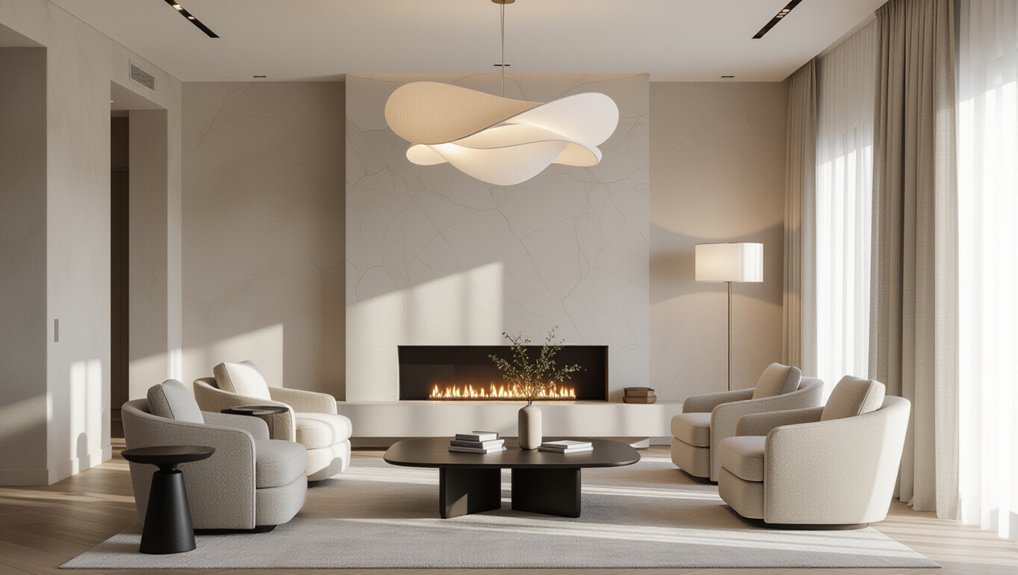
Just as vintage accents add character through contrast, layered lighting gives a room depth and flexibility. By combining ambient illumination, task lights, and accent fixtures, you can shape how each area looks and works throughout the day.
Start with soft, even light from ceiling fixtures or wall sconces; then add focused lamps where you read, cook, or work. Use accent lighting to highlight artwork, shelves, or architectural details.
These lighting layers let you adjust brightness for different activities and moods, rather than relying on one harsh overhead source. Choose dimmers and warm, consistent bulbs to make shifts easy and keep the room cohesive.
Plan controls near entrances and seating areas, so you can change the atmosphere without crossing the room. Thoughtful placement also reduces glare and shadows, making everyday tasks more comfortable.
How Do Textured Fabrics Add Depth to Neutral Rooms?
In a neutral room, textured fabrics create depth without adding strong color. You can build visual interest by combining materials that feel and look different, such as linen, wool, velvet, and bouclé. Their varied surfaces catch light in distinct ways, giving neutral rooms dimension while keeping the palette calm.
Start with a simple foundation: choose a smooth sofa, then add a nubby throw, woven cushions, or a subtly patterned rug. Vary texture, not just color, so each layer has a clear purpose.
For balance, repeat one material or tone across the room; too many competing finishes can make the space feel busy.
Consider durability, too. Select fabrics suited to how you use each piece, and test samples in your room before committing.
Thoughtful contrasts make a restrained palette feel welcoming, polished, and personal.
How Can Smart Home Features Blend Into Modern Design?
Smart home features blend into modern design when they support daily routines without drawing attention. Choose discreet controls, streamlined fixtures, and devices that complement your room’s finishes. A smart thermostat, for example, can sit flush against the wall, while speakers can disappear into cabinetry or ceilings.
Plan Smart integration before you renovate or redecorate. Group controls where you’ll naturally use them, and connect lighting, shades, and climate settings to simple routines. This keeps your setup useful rather than cluttered with apps and switches.
Prioritize reliable systems that work together, and hide cables during construction or with tidy channels afterward.
Thoughtful technological aesthetics depend on restraint. Match device colors to walls, select minimal interfaces, and let architectural details remain the focus. You’ll gain convenience without sacrificing warmth, visual calm, or a cohesive modern interior.
Conclusion
The best modern interiors don’t chase trends; they make everyday life feel better. Choose natural materials, grounded colors, flexible furniture, and meaningful vintage pieces to create rooms that feel personal, not staged. Layer lighting and tactile fabrics for comfort, then add smart features only where they genuinely help. Think of your home as a well-tended garden: let it grow with your needs, reflect your character, and offer a welcoming place to return to each day. Start with one thoughtful change, then build from there.