
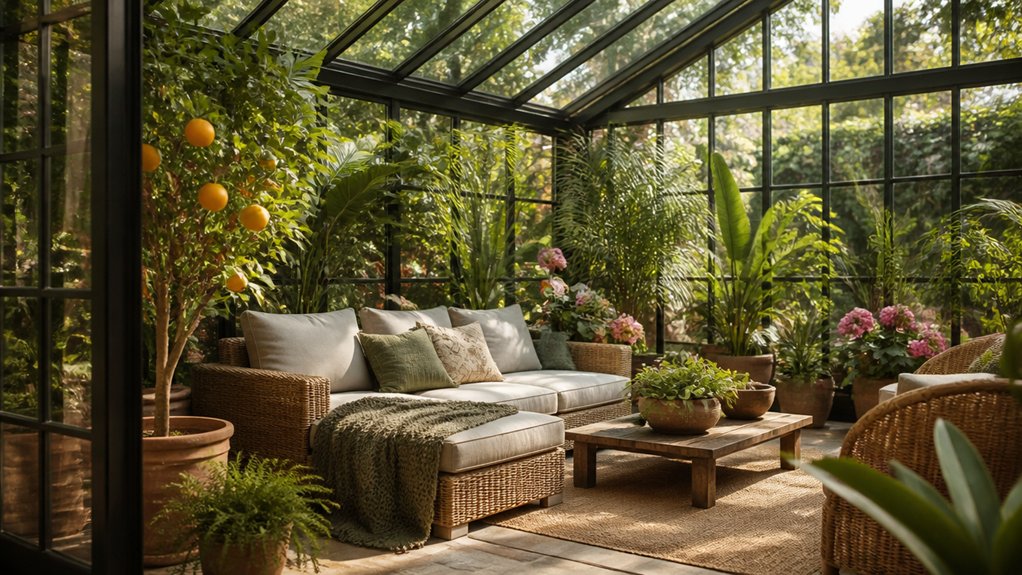

Like a well-designed garden room, your conservatory should feel inviting in every season, not just on bright summer days. Start with practical choices that help you manage changing light, temperature, and comfort throughout the year. The right blinds, adaptable furniture, layered lighting, and resilient plants can turn the space into a natural extension of your home—but one detail is often overlooked.
Plan Your Conservatory for Year-Round Comfort
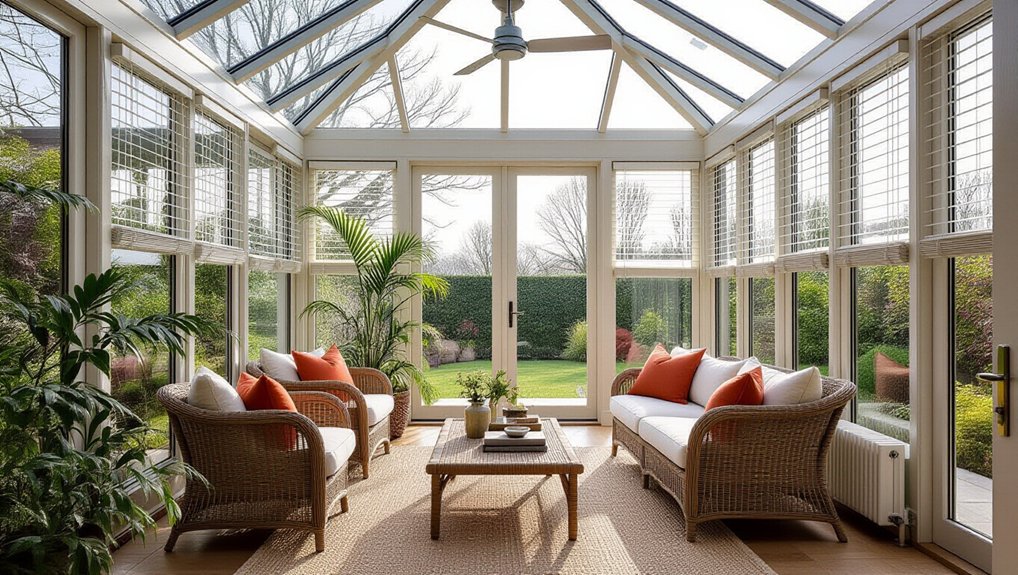
A comfortable conservatory starts with a plan for every season, not just sunny days. Begin by evaluating how you’ll use the room, where daylight falls, and which areas feel cold or overheated. That information helps you position seating, storage, and work surfaces for practical daily use.
Compare conservatory flooring options for comfort, durability, and temperature changes. Tile is easy to clean but can feel cold; engineered wood or quality vinyl may feel warmer underfoot. Add a suitable rug where you want extra softness, while keeping paths clear.
Plan outdoor views integration by arranging furniture to face the garden and keeping sightlines open. Choose materials that complement the adjoining rooms so the conservatory feels connected to your home.
Check ventilation and insulation early, too; these decisions support comfort throughout the year without relying on seasonal fixes.
Choose Conservatory Blinds for Sun and Privacy
Once you’ve planned for year-round comfort, choose conservatory blinds that manage glare, heat, and privacy without blocking the garden view. Match your blinds to the room’s glazing: roof blinds reduce overhead sun, while pleated or roller styles suit windows and offer flexible solar shading.
For strong afternoon exposure, select fabrics designed to reflect heat and filter UV rays; this helps protect finishes from fading and keeps the space more comfortable. Check that roof systems fit securely and operate easily, especially on hard-to-reach panes.
If nearby homes overlook your conservatory, use privacy screens or adjustable blinds that let daylight in while limiting views from outside. Choose moisture-resistant materials, and consider motorised controls for convenient adjustment.
Test fabric samples in changing light before you commit, since colours and transparency can look different across the day.
Pick Furniture That Works Year-Round
Because a conservatory can swing from sunny and warm to cool and damp, choose furniture that handles changing conditions. Prioritize Material durability: powder-coated metal resists rust, treated hardwood withstands humidity, and synthetic wicker won’t crack as readily as natural fibers. Check care requirements before buying; removable, washable covers make spills and seasonal dust easier to manage.
Consider how you’ll use the room throughout the year. A compact dining set suits meals, while a deep-seated sofa supports reading and conversation. Furniture styles should complement your home without crowding the conservatory.
Measure the space, including doorways and routes between furniture, so pieces remain practical when you’re carrying plants or serving guests. Choose lightweight chairs you can reposition, and avoid delicate finishes that fade or warp in strong sunlight. These choices help your conservatory stay comfortable and functional through changing seasons.
Layer Conservatory Lighting for Cozy Evenings
As daylight fades, layered lighting keeps your conservatory inviting without relying on one harsh overhead fixture. Start with dimmable ceiling lights or discreet wall fixtures to provide even ambient lighting for reading, dining, and moving safely through the room.
Then add table lamps beside seating and floor lamps in darker corners; their lower glow softens the space and supports mood enhancement. Choose warm-white bulbs, around 2700 to 3000 kelvins, to create a comfortable evening atmosphere without making colors look dull.
If your conservatory has glass walls, use adjustable shades or carefully positioned fixtures to limit reflections and glare. Put lights on separate switches, or use smart controls, so you can adjust brightness for each activity.
A balanced mix of direct and indirect light gives you flexibility and comfort year-round.
Add Indoor Plants That Thrive in Conservatories
Choose conservatory plants according to the light, temperature, and humidity your space actually provides. South-facing rooms suit sun-loving citrus, succulents, and hibiscus, while filtered light supports ferns and peace lilies.
Check winter temperatures before choosing tropical varieties; a conservatory can cool sharply overnight, even when it feels warm by day.
Plan indoor plant placement around changing sunlight, not just the room’s appearance. Keep delicate leaves away from hot glass and cold drafts, and group plants with similar moisture needs.
Use pots with drainage holes, then water thoroughly and let excess drain. Adjust plant watering schedules seasonally: growth slows in winter, so many plants need less frequent watering.
Test the soil with your finger rather than following a rigid calendar. Rotate pots regularly for balanced growth, and remove dead leaves promptly to limit pests and disease.
A simple thermometer and humidity gauge can help you refine care.
Conclusion
With a thoughtful plan, your conservatory can feel comfortable in every season. Choose blinds that temper sunlight and protect privacy, then add durable furniture with removable covers for easy care. Layer warm, dimmable lighting to make evenings inviting, and select plants that suit your room’s changing light. Keep colors and flooring cohesive for a polished finish. These practical choices turn your conservatory into a bright, welcoming retreat that feels like a thousand sunny days, whatever the weather brings.