
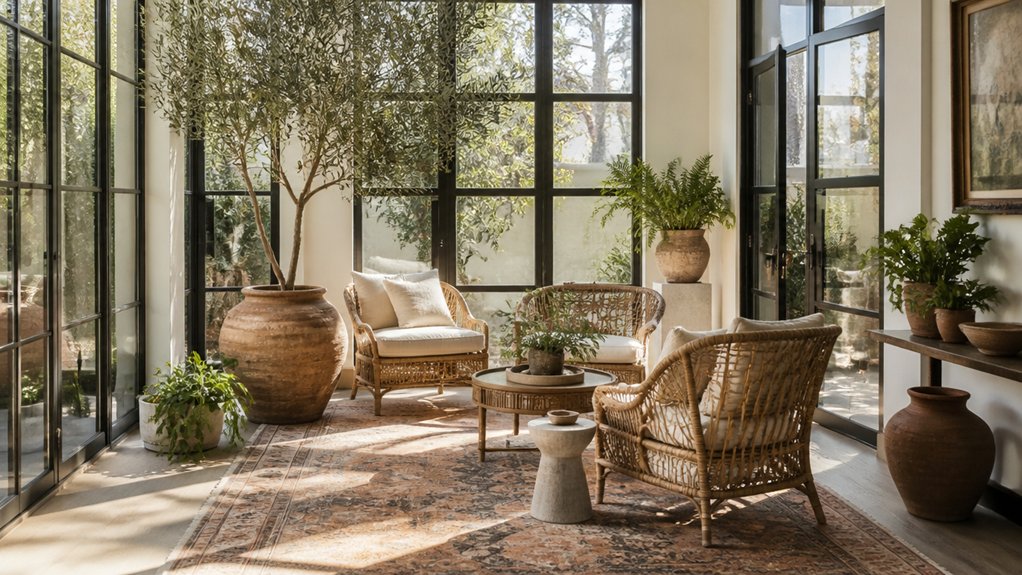

A well-designed sun room gives you bright, comfortable space without feeling like a glass box. Start by planning window placement, seating, and light control together; then add warm wood, tactile fabrics, and plants to give the room character. You’ll also need to account for changing temperatures and strong sun throughout the year. A few practical choices can make the difference between a space you use daily and one you avoid when the weather shifts.
Sun Room Designs That Make the Most of Natural Light
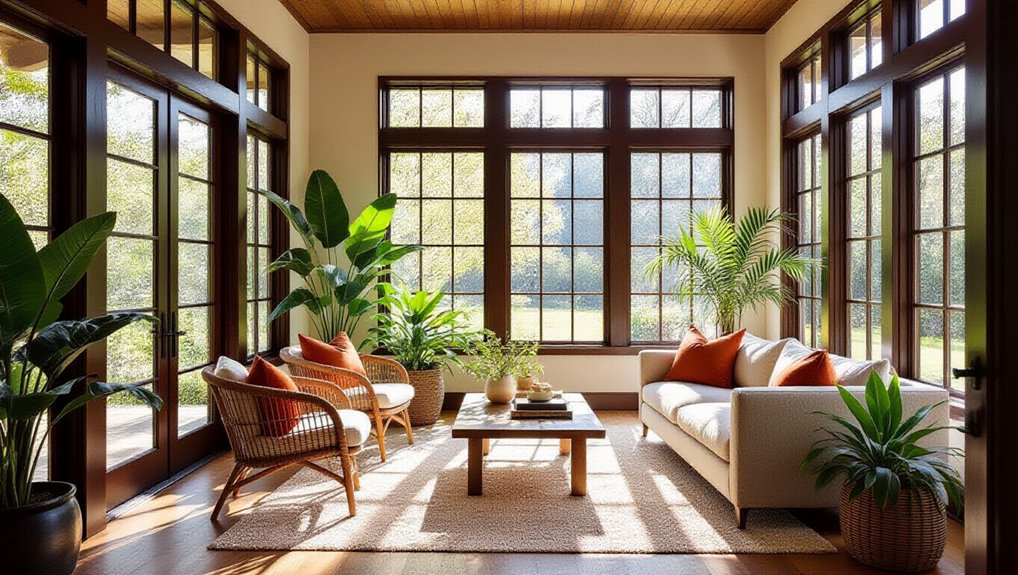
A well-planned sun room captures daylight without letting glare or heat take over. Position the largest windows to face south or east, depending on when you want the room brightest. Before choosing glazing, consider your climate and the room’s exposure.
Low-emissivity glass insulation helps limit heat transfer while keeping views clear, and properly sealed frames reduce drafts. Add solar shading with adjustable blinds, exterior screens, or an overhang sized for the sun’s path. You’ll gain control over brightness and temperature without blocking daylight all day.
Keep window areas unobstructed, and use reflective surfaces sparingly to spread light rather than create harsh glare. If you’re planning a renovation, test how sunlight moves through the space across seasons. That observation helps you place windows and shading where they’ll work best.
Warm Materials for a More Inviting Sun Room
Use natural wood accents to soften your sun room and connect it to the outdoors.
Add tactile textiles, such as woven throws and linen cushions, for comfort and texture.
Choose a warm color palette to make the space feel inviting without diminishing its natural light.
Natural Wood Accents
Natural wood accents can soften a sun room’s bright, glass-heavy look and make it feel more welcoming. Choose pieces that suit your room’s size and exposure.
A knotty pine ceiling or trim adds rustic charm, while oak or maple furniture offers a cleaner, more restrained look. If sunlight is strong, protect wood with a finish designed to resist fading and drying.
Use a consistent tone across a few elements, such as a side table, window frame, and shelving, to create cohesion without making the space feel heavy. For a small sun room, keep larger surfaces light and reserve darker wood for accents.
Check that finishes are suitable for indoor use, and leave enough clearance around windows and doors so woodwork won’t obstruct movement or light.
Tactile Textiles
Though sunlight can make a sun room feel bright and open, tactile textiles add warmth and comfort. Choose durable, fade-resistant upholstery for chairs and benches, especially where direct sun reaches the furniture. Linen blends and tightly woven cotton offer a pleasant hand while standing up to everyday use.
Layer a washable throw over a seat, and add cushions in varied weaves to make lounging more inviting. Tactile fabric accents, such as a nubby footstool or woven shade, bring depth without crowding the room.
For a subtle change underfoot, use a low-pile rug with a nonslip backing; it defines a seating area and feels comfortable beneath bare feet. You can also consider textured wall coverings, but check the manufacturer’s guidance for humidity and sunlight before installation.
Rotate cushions periodically to limit uneven fading.
Warm Color Palettes
Warm colors can make a sun room feel more inviting without diminishing its brightness. Choose warm materials in measured doses: oak flooring, honey-toned wicker, terracotta planters, or a rust-colored accent chair. These natural finishes add depth while letting daylight remain the room’s main feature.
Use color psychology to guide your palette. Soft ochre, muted clay, and warm beige can create a relaxed atmosphere; deeper amber or burnt orange works best as a small accent. Balance these shades with white walls, pale stone, or linen upholstery so the space doesn’t feel heavy.
Check samples in morning and afternoon light before committing. After sunset, artificial lighting can shift warm colors toward yellow or red, so select bulbs with a consistent color temperature.
Repeat one or two tones across furnishings and accessories for a cohesive, welcoming look.
Colorful Textures for a Cozy Sun Room
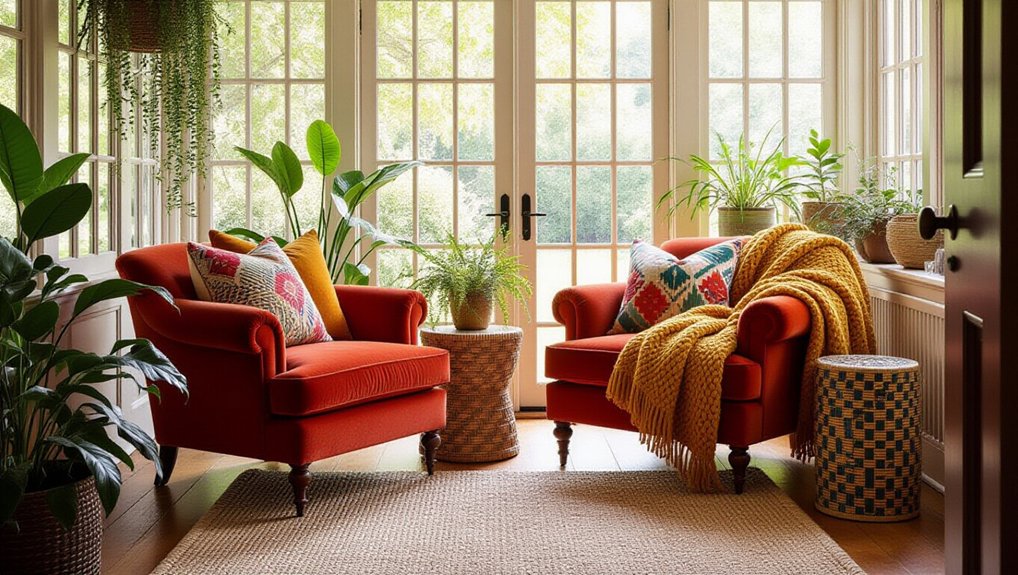
Layering color and texture makes a sun room feel cozy without dulling its bright, open character. Choose textured fabrics for cushions, curtains, or a small upholstered chair, then balance their tactile appeal with a few vibrant patterns. Stripes, checks, or botanical motifs can add energy, but keep one pattern dominant and repeat its colors elsewhere for a composed look.
Use woven throws, nubby rugs, and natural-fiber shades to soften hard surfaces and manage glare. Before buying, check fabric samples in the room at different times of day; strong sunlight can shift colors and fade delicate materials. Select durable, fade-resistant textiles, especially for seating near windows.
If your palette already includes warm hues, introduce contrast through texture rather than adding more colors. This approach gives you depth, comfort, and a sunlit space that feels thoughtfully finished.
Plant-Filled Sun Rooms That Feel Like a Retreat
Layer plants at different heights to create a lush retreat without blocking natural light. Choose species suited to your sun room’s conditions, and group them where watering is easy.
Add cozy garden seating so you can relax among the greenery.
Layered Greenery
When you fill a sun room with plants at different heights, it feels more like a retreat than a display. Start with tall palms or a fiddle-leaf fig to anchor empty corners, then add medium-sized plants on sturdy stands. Place trailing varieties on shelves to soften hard edges without blocking pathways.
Match each plant to the room’s light. Use sun-loving succulents near bright windows, and move ferns or calatheas into filtered light. Rotate pots regularly so growth stays balanced, and check soil before watering; containers can dry quickly in warm, sunny rooms.
Choose pots with complementary colors and textures to create a cohesive look. Keep drainage in mind, and use saucers to protect floors. If you add indoor waterfalls or statement lighting, position them carefully so moisture and heat won’t stress nearby foliage.
Cozy Garden Seating
Once your greenery is in place, add comfortable seating to make the sun room a retreat you’ll want to use. Choose a chair or compact loveseat that fits your room without blocking walkways or crowding plants.
If sunlight is strong, position your seat where you can enjoy the view without overheating; adjustable blinds help you control glare.
Select cushions in durable, easy-to-clean fabrics, especially if you water nearby plants often. A small side table gives you a convenient place for tea, books, or pruning shears.
For a cohesive look, pair natural textures with restrained colors that complement your foliage. You don’t need outdoor furniture, but weather-resistant pieces can handle humidity and frequent sun exposure.
Finish with practical garden accessories, such as a soft throw or a plant stand, and keep the arrangement open enough for easy care.
Sun Room Seating for Reading and Gathering
Choose sunroom seating that supports both quiet reading and easy conversation. Start with a comfortable armchair near a small table, then add a loveseat or two compact chairs so you can welcome guests without crowding the room. Arrange seats to make conversation natural, while keeping a clear path through the space.
For flexible Sun room seating ideas, choose lightweight chairs you can reposition as your needs change. Check that cushions feel supportive and fabrics suit frequent use in a bright, active room.
Add Reading nook accessories such as an adjustable floor lamp, a footstool, and a basket for books. A side table keeps your mug and reading materials close at hand.
If you share the room, provide separate spots for reading, relaxing, or talking, so everyone can settle in comfortably.
Window Treatments for Sun Room Light and Privacy
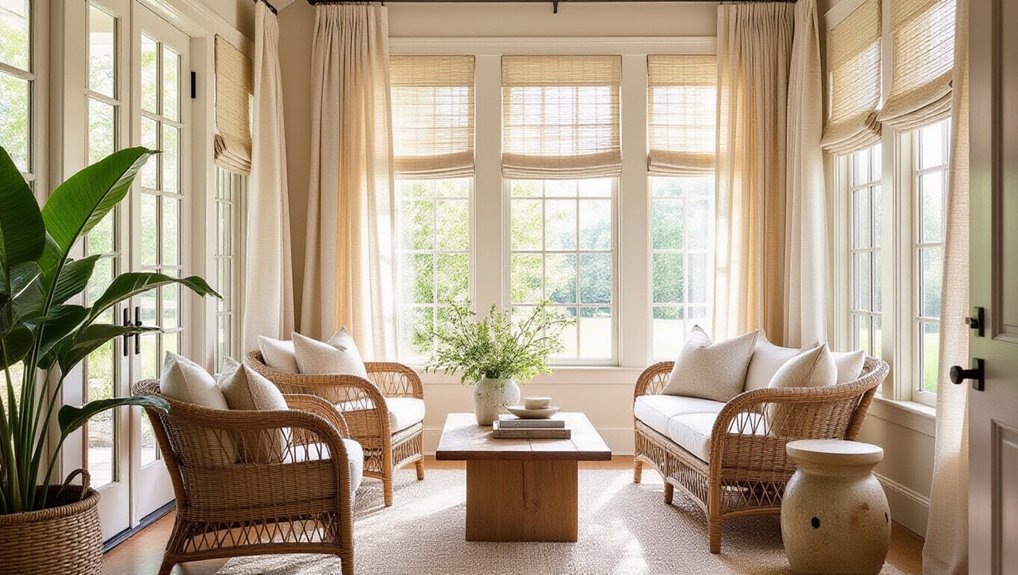
To control glare and protect privacy without losing the sunroom’s bright feel, select window treatments that suit each window’s exposure and your daily routine. Sheer curtains soften direct sunlight, filter views from nearby homes, and preserve an airy look. Choose washable fabric if dust or pollen gathers on the windows.
For stronger light control, install blackout blinds on windows that face intense afternoon sun or streetlights. You can raise them when you want an unobstructed view and lower them when you need privacy. Layering curtains over blinds gives you flexible control without making the room feel closed in.
Measure each window carefully, including trim, before ordering. Mount treatments high and wide to frame the glass and keep more daylight flowing in when they’re open. Select simple hardware that complements your room’s character.
Year-Round Sun Room Comfort
A sunroom stays comfortable year-round when you manage heat, drafts, and humidity before they become problems. Start by checking window seals and door sweeps; replace worn weatherstripping to block cold air and reduce energy loss.
For summer, add exterior shading or adjustable blinds to limit glare and overheating while preserving the light you enjoy.
Use Solar heating wisely: let winter sun warm the room, then close insulated curtains after sunset to retain heat.
A ceiling fan can circulate warm air downward in winter and create a cooling breeze in summer.
For Energy efficiency, choose a properly sized heat pump or connect the room to your home’s HVAC system only if it can handle the added load.
Monitor humidity, ventilate when needed, and use a dehumidifier if condensation appears.
These practical steps keep your sunroom inviting through changing seasons.
Conclusion
Your sun room doesn’t need a grand renovation to feel transformed. Let daylight spill across warm wood, layered textiles, and leafy plants, then shape it with curtains that soften the brightest hours and offer privacy when you need it. Arrange seating for both quiet reading and easy conversation, and add climate controls to keep the room welcoming through changing seasons. With thoughtful choices and simple upkeep, you’ll create a bright, comfortable retreat that feels ready to welcome you every day.