
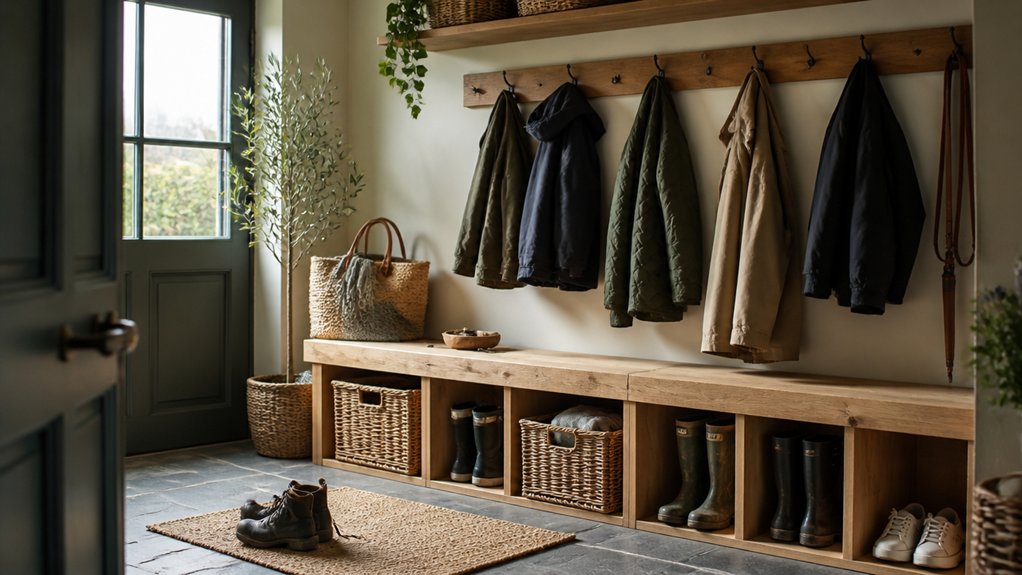

Like a well-run station, your boot room needs a place for every arrival. With the right layout, you can keep shoes, coats and muddy gear organised without sacrificing valuable space. A sturdy bench, easy-clean surfaces and smart storage make daily routines simpler, even in a busy household. But the most effective design depends on how your family uses the room—and one small planning choice can make all the difference.
Design a Boot Room for Small Spaces
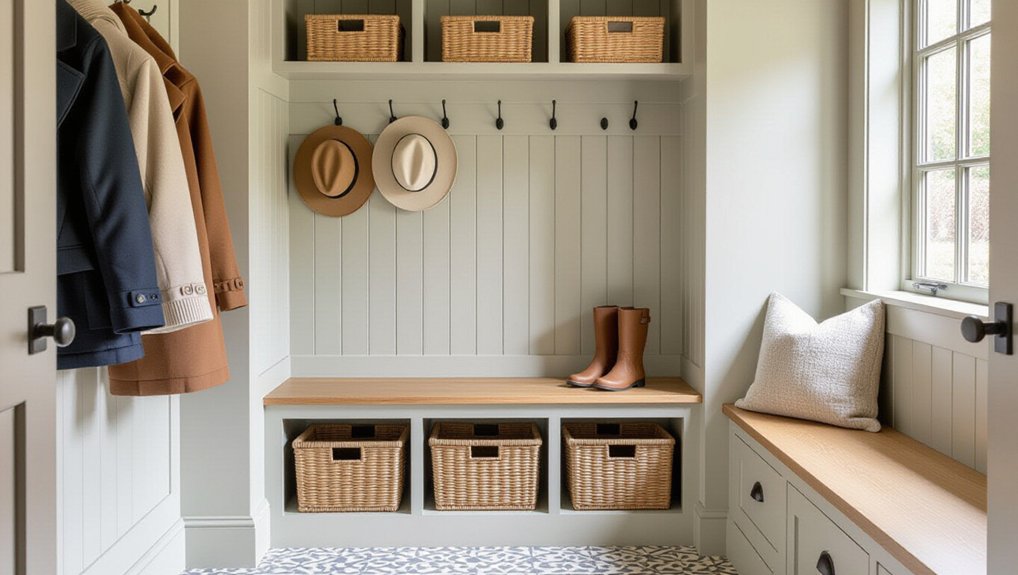
A small boot room can still keep coats, shoes and outdoor gear organised if you make every inch work. Start with a Compact layout that preserves a clear route through the space. Measure the doorway, walls and any awkward corners before choosing fittings, then keep bulky pieces away from the main walkway.
Use Vertical shelving to take advantage of wall height, placing frequently used items within easy reach and reserving higher shelves for seasonal gear. Hooks, narrow ledges and slim cabinets can add useful capacity without crowding the floor.
Choose light colours and reflective surfaces to help a tight room feel brighter, and add focused lighting so you can see clearly on dark mornings. Keep the design simple, leave room to move, and tailor each fixture to your household’s routines and available dimensions.
Choose Boot Room Storage for Shoes and Coats
Choose boot room storage that gives shoes and coats a clear place without blocking the route through the room. Measure the available wall space first, then match storage to your household’s daily needs. Hooks keep frequently worn coats within reach, while a rail suits longer garments that need room to hang.
Add open shoe racks for everyday pairs so damp footwear can dry; use closed cupboards to contain clutter and protect occasional shoes from dust. If several people share the room, assign each person a hook or shelf to prevent piles from building up.
Choose durable, easy-clean materials for Sustainable storage, and favour Minimalist design to keep the room feeling calm. Adjustable shelves help you adapt as needs change, while labelled baskets corral gloves, hats and other small essentials without taking up valuable floor space.
Add a Bench for Easier Boot Room Routines
When you add a bench, you give yourself a stable place to sit while pulling on boots or changing shoes. Choose a height that lets you plant both feet comfortably, and leave enough room to stand without blocking the doorway.
A bench with a sturdy frame will handle daily use, while a backrest can offer extra support if you need it.
Use the space beneath the seat to keep frequently worn footwear within reach, or choose a lift-up lid for less-used accessories.
Keep the surface clear so you can sit down quickly, and assign each family member a spot to reduce morning delays.
Thoughtful bench seating supports safer, smoother routines and strengthens entryway organization without adding unnecessary furniture.
Measure your available space before buying to ensure the bench fits comfortably.
Pick Easy-Clean Boot Room Surfaces
After setting up a practical bench, protect the room from mud and moisture with surfaces that wipe clean easily. Choose porcelain or ceramic floor tiles; their sealed, nonporous surfaces resist stains and handle frequent mopping. Select a textured finish for grip, especially near the entrance, but avoid deep grooves that trap grit.
For walls, use washable paint or durable panels that let you remove splashes without damaging the finish. If you prefer timber, seal it properly and wipe spills promptly to prevent swelling.
Compare sustainable materials, such as recycled-content tiles, with conventional options, checking durability and maintenance needs before you buy. Aesthetic finishes can still feel welcoming: coordinate colours and textures with adjoining rooms while prioritising surfaces that tolerate daily cleaning.
Keep grout sealed, and follow each manufacturer’s care instructions.
Store Muddy Boots and Wet Gear
Keep muddy boots and wet gear contained so they don’t spread dirt or moisture through the room. Fit a sturdy boot tray beneath open shelving, choosing a raised edge to catch drips and loose soil. Leave enough space between pairs for air to circulate, which helps boots dry and discourages odours.
For tall wellies, use a dedicated rack that holds them upside down; this keeps water from pooling inside and speeds drying. Add hooks or a rail nearby for Wet weather gear, positioning them above the tray so coats and trousers can drip safely.
Choose rust-resistant fittings and allow a clear path to the door. Empty and rinse the tray regularly, and wipe up spills promptly. These simple measures limit Muddy footprints and keep the boot room ready for daily use.
Organise Bags, Sports Kit and Daily Essentials
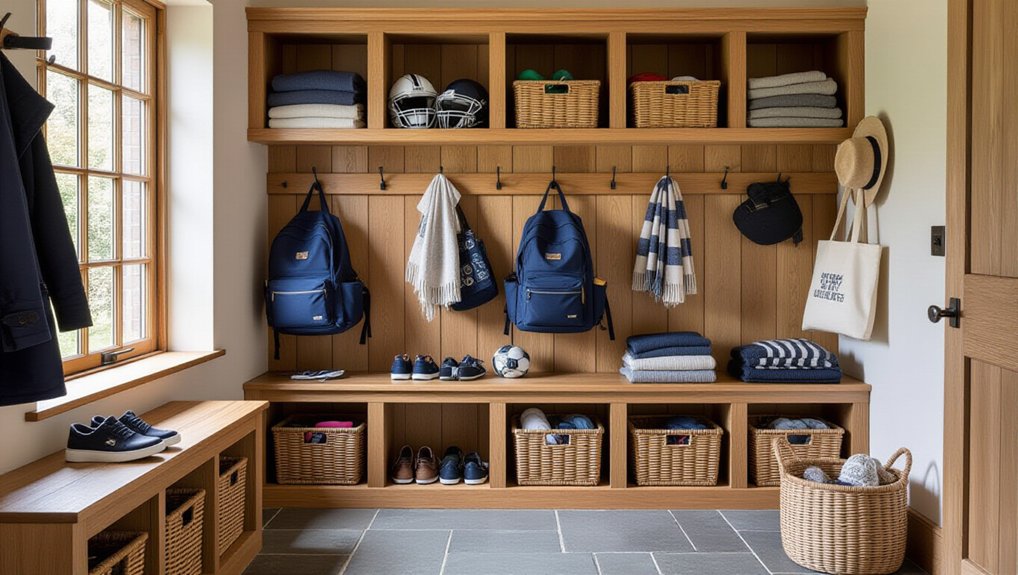
Give each family member a labelled hook or cubby for bags and sports kit, keeping gear easy to grab and return.
Set up an everyday essentials station with trays or baskets for keys, wallets, and school items.
Place it near the exit so you can check what you need before leaving.
Bags and Kit Storage
A well-planned boot room gives bags, sports kit and everyday essentials a designated place, so you can find what you need without adding clutter to the hallway. Fit sturdy hooks at different heights so you can hang backpacks, kit bags and coats within easy reach. Assign each person a hook or labelled cubby to prevent mix-ups, and choose wipe-clean finishes that handle muddy gear.
Open baskets or ventilated lockers let damp sports kit dry, while shelves keep helmets and smaller items off the floor. Measure bulky equipment before choosing storage, and leave enough clearance to retrieve it comfortably.
For Outdoor inspiration, use natural textures and practical materials; seasonal decoration can add character without taking up valuable storage space. Keep this area focused on bags and kit, not items for a separate daily essentials station.
Everyday Essentials Station
Once bags and sports kit have a place, set up a nearby station for the items you need each day. Choose a shelf, shallow cabinet or narrow console that won’t obstruct the walkway. Use separate trays for keys, wallets, sunglasses and post, so you can find essentials quickly when you’re heading out. Add a small bowl for loose change and a charging point for devices, keeping cables tidy and away from wet footwear.
Position the station beside the door, but above the splash zone where muddy footprints and damp coats are common. Install coat hooks within easy reach for everyday outerwear, and label baskets if several people share the space. Keep only current necessities here; store seasonal items elsewhere.
A weekly reset clears clutter and makes sure your daily essentials stay visible, accessible and ready to go.
Add Family-Friendly Details to Your Boot Room
Make your boot room work for every member of the family by giving everyday essentials a clear, accessible place. Add low hooks so children can hang coats and bags without help, and choose a sturdy bench that makes changing shoes safer and easier. Label baskets by person or item to keep gloves, hats, and sports gear sorted.
If you have pets, set a washable mat near the door to catch muddy pawprints, and store leads within easy reach. Select weatherproof decor, such as wipe-clean wall panels and hard-wearing flooring, to handle daily wear without demanding extra upkeep.
Keep cleaning supplies in a secured cupboard, away from children and animals. Finally, leave a clear route through the room; enough space helps everyone move comfortably, even when several people arrive home together.
Conclusion
A well-planned boot room turns the daily rush into a smoother routine. Give shoes, coats, muddy boots and bags their own places, and keep walkways clear with vertical storage. Add a sturdy bench, easy-clean surfaces and family-friendly details that make changing and tidying simple. When rain-soaked gear comes through the door, durable finishes and thoughtful zones help contain the mess. Build around your household’s habits, and you’ll create an organised entrance that works hard every day.