
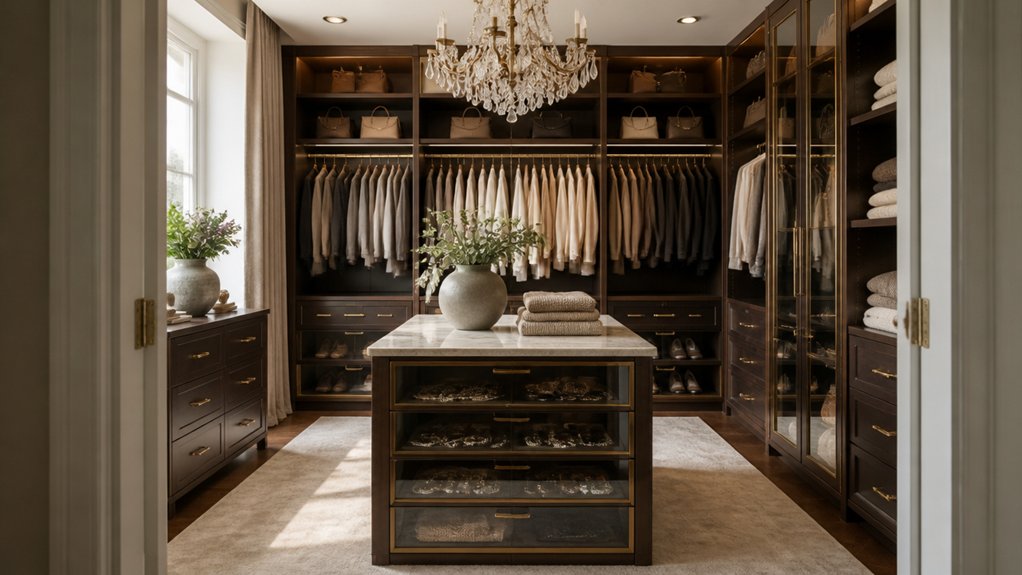

A boutique-style walk-in closet depends less on its size than on how you plan its light, storage, and displays. Start by dividing the space into clear zones for clothing, shoes, bags, and everyday essentials, then choose finishes that make the whole room feel cohesive. Warm, layered lighting and carefully placed shelving can turn routine dressing into a more polished experience. A few space-saving choices can make even a small closet feel surprisingly refined.
Plan a Boutique-Style Walk-In Closet Layout
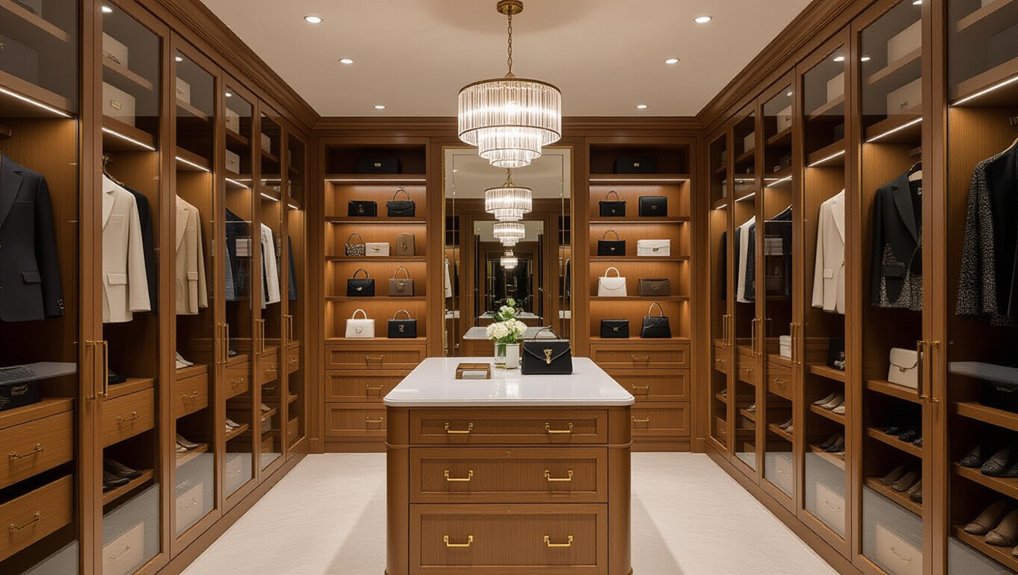
A boutique-style walk-in closet pairs clear zones with display-worthy details, so you can find what you need and enjoy the space. Start by measuring the room, noting door swings, windows, and outlets. Then map zones for hanging clothes, folded items, shoes, and accessories, keeping frequently used pieces within easy reach.
Choose custom shelving that fits your wardrobe: double rods maximize hanging space, while adjustable shelves accommodate bags and changing storage needs. Add drawers for smaller items and open cubbies to showcase favorite shoes or handbags.
Use consistent color schemes across cabinetry, baskets, and finishes to create a polished, cohesive look. If your closet is narrow, favor shallow storage and a clear central path. In a larger room, include an island only if you can maintain comfortable circulation around it.
Layer Warm Lighting Throughout Your Closet
Layering warm lighting makes your walk-in closet easier to use and more inviting. Start with ambient illumination from recessed ceiling lights or a flush mount, choosing a warm color temperature around 2700 to 3000 kelvins. This soft base light helps you move comfortably without casting harsh shadows.
Next, add task lighting where you need accurate visibility. Install LED strips beneath shelves or inside hanging sections, and position vertical lights beside a mirror to reduce shadows when you dress. Choose fixtures with high color accuracy so clothing shades look true.
Use dimmers to adjust brightness throughout the day, and place switches near the entrance for easy access. Decorative fixtures can add character, but make sure they don’t obstruct storage or hang low enough to interfere with movement.
Check that every lighting choice suits your closet’s layout and electrical setup.
Choose Polished Walk-In Closet Finishes
Choose refined materials such as wood veneer, stone, or durable laminate to give your walk-in closet a polished look.
Pair finishes with elegant hardware in a consistent metal tone for a cohesive design.
Select options that suit your style and stand up to daily use.
Select Refined Materials
Refined materials give your walk-in closet a polished look while standing up to daily use. Choose cabinet fronts in durable wood veneer or quality laminate, and pair them with a smooth, easy-to-clean finish.
For shelves, select sturdy materials that resist sagging under folded clothes and storage bins. A consistent palette of warm wood, painted surfaces, and subtle stone can make your closet feel cohesive without overwhelming the space.
Add softness with luxury textiles, such as a cushioned bench or a lined drawer for delicate accessories. Use decorative accents sparingly, letting their color or texture complement the cabinetry rather than compete with it.
Before you commit, compare samples in your closet’s lighting and check how each surface handles fingerprints, scratches, and routine cleaning. Thoughtful material choices keep the room elegant and practical for years.
Add Elegant Hardware
Elegant hardware can give your walk-in closet a polished finish while making drawers and doors easier to use. Choose pulls and knobs that complement your refined materials, cabinetry color, and overall design. Brushed brass adds warmth, polished nickel feels crisp, and matte black creates a modern contrast. Keep finishes consistent across drawers, cabinet doors, and built-in storage for a cohesive look.
Consider scale before you buy. Longer pulls suit wide drawers, while smaller decorative knobs work well on compact doors. Vintage accents can bring character to a tailored closet, but use them selectively so the space still feels intentional.
Check that each piece feels comfortable in your hand and operates smoothly. If you’re updating existing cabinetry, measure hole spacing to avoid extra drilling. Quality hardware withstands daily use, so prioritize durable construction and a finish that resists tarnishing and scratches.
Display Shoes, Bags, and Accessories
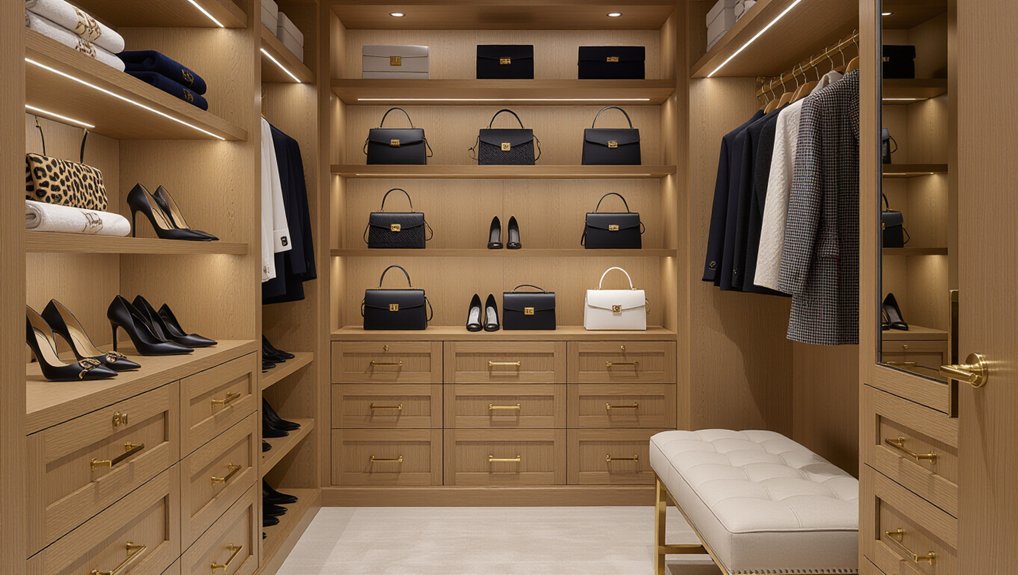
A well-planned display keeps shoes, bags, and accessories visible without making your walk-in closet feel cluttered. Arrange footwear on open shelves, grouping pairs by type or color so you can scan your collection quickly. For an effective Shoe display, leave enough height for boots and use angled shelves to show off special pairs.
Place handbags upright on shelves or in clear-front cubbies; add inserts to help them hold their shape. Keep delicate pieces away from direct sunlight, which can fade leather and fabric.
Thoughtful accessory organization adds polish without sacrificing access. Use shallow trays or small stands to present watches, jewelry, belts, and sunglasses neatly. Choose consistent finishes and repeat a few materials to create a boutique-like look.
Leave breathing room between items, and rotate seasonal pieces into view. Your favorite finds will feel curated, not crowded.
Organize Everyday Essentials With Smart Storage
Make daily routines easier by giving frequently used items a dedicated place. Keep your daily essentials—such as watches, belts, sunglasses, and hair accessories—in shallow drawers or divided trays near the closet entrance. You’ll find what you need quickly and return each item without disrupting the rest of your wardrobe.
Use adjustable drawer dividers to separate small pieces, and label bins for items you rotate seasonally. A valet rod gives tomorrow’s outfit a temporary home, while a catchall tray collects pocket contents. Choose clear containers when visibility matters; use opaque ones for items you’d rather keep out of sight.
Group accessories by type, then arrange them by color or occasion. This system makes it easier to coordinate with changing fashion trends and maintain cohesive color schemes. Review your storage regularly, removing anything you no longer use so every assigned spot stays useful.
Save Space in a Small Walk-In Closet
When floor space is limited, use the closet’s full height and keep the layout easy to navigate. Install double-hang rods for shirts and trousers, then reserve upper shelves for seasonal items in labeled bins. A slim tower of drawers can hold accessories without blocking the walkway.
Choose shallow shelves and pull-out baskets so you can reach items without shifting everything else.
Use the back of the door for hooks or a narrow organizer, but don’t overload it. Keep frequently worn clothes at eye level and store rarely used pieces higher up.
Leave a small gap between garments to support closet ventilation and clothing preservation. Good airflow helps reduce musty odors and moisture buildup.
Add bright, even lighting, and measure each fixture before installation to guarantee every inch works efficiently.
Conclusion
You might notice a coincidence: the closet that feels most like a boutique is often the one that works hardest for you. A thoughtful layout, warm lighting, polished finishes, and visible accessories make getting dressed feel special, while smart storage keeps clutter in check. Whether you have a spacious room or a compact nook, choose details that suit your routine and taste. With a few intentional choices, you’ll bring boutique style home—and enjoy it every day.