
A room can feel cramped even when it has plenty of floor space, especially when clutter, heavy furnishings, or poor lighting interrupt the view. You can make it feel brighter and more open by clearing pathways, drawing in daylight, and choosing colors and furnishings that reflect light without crowding the room. Start with the changes that make the biggest difference, then refine the details that help every corner feel more spacious.
Start With the Changes That Make a Room Feel Bigger
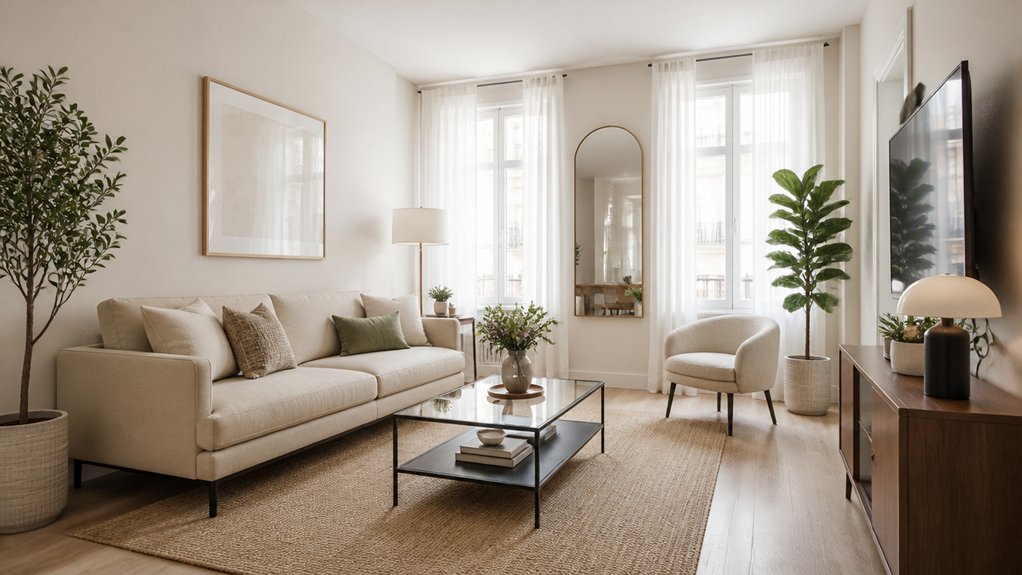
Before choosing colors or décor, address the features that affect how spacious a room feels. Start by evaluating your room’s proportions, natural light, and sightlines. You can’t change its footprint, but you can make the space feel more open by choosing furniture scale that suits the room.
Oversized pieces can block pathways and dominate the view; streamlined options leave more visible floor and allow easier movement. Check ceiling height, too. Low ceilings benefit from furniture with a lower profile, while taller pieces can draw the eye upward in rooms with generous vertical space.
Arrange seating to preserve clear routes between doors and windows, and avoid positioning large items where they interrupt daylight. If you rent, consider reversible changes, such as replacing bulky lamps or raising curtain rods to emphasize height.
These adjustments establish a more spacious foundation.
Clear Clutter and Choose Space-Saving Storage
Start by removing items you don’t use; clear surfaces and open pathways make a room feel larger.
Store essentials in space-saving furniture, such as ottomans with hidden compartments or shelves that use vertical wall space.
Choose storage that keeps belongings accessible without adding visual clutter.
Remove Unnecessary Clutter
Clutter makes a room feel cramped by crowding surfaces and blocking sightlines, so remove items you don’t use or need. Start with one area, such as a countertop, shelf, or chair, and sort everything into keep, donate, recycle, or discard piles. Be honest about what you use, value, and have room to display. If you haven’t used an item in a year and it holds no special meaning, let it go.
Apply the same standard to duplicates, broken belongings, and decorations that compete for attention.
Effective Decluttering techniques make the process manageable: set a timer, work in short sessions, and finish each area before moving on. Keep frequently used essentials accessible, but return them to their proper places after use.
A restrained approach to Minimalist decor helps you preserve open surfaces and clear sightlines without making your room feel bare.
Choose Space-Saving Storage
Once you’ve cleared what you don’t need, choose storage that keeps essentials organized without taking up valuable floor space. Look for pieces that use overlooked areas and give every item a clear home.
Slide underbed storage beneath your bed for seasonal clothing, spare linens, or shoes you don’t wear daily. Choose low, lidded containers that pull out easily and keep dust away.
Install wall mounted shelves above a desk, sofa, or doorway to hold books and display a few meaningful objects. Keep shelves orderly; crowded displays can make a room feel busy.
In entryways, use hooks and a narrow rack instead of a bulky cabinet. Select furniture with built-in storage, such as an ottoman or bed with drawers.
Measure first, then choose appropriately sized solutions so your belongings stay accessible and your floor remains open.
Arrange Furniture to Open Up the Room
To make a room feel more open, arrange furniture to keep pathways clear and preserve sightlines. Start by identifying the main routes you take through the space, then position large pieces outside those paths. Thoughtful furniture placement improves traffic flow and helps you move comfortably without weaving around obstacles.
Pull sofas and chairs slightly away from walls when the room allows; this can create a more balanced layout and define a conversation area. Keep bulky furniture low or place taller pieces along the perimeter so they don’t interrupt views across the room.
Choose appropriately scaled pieces, and avoid crowding a small area with too many seats or tables. Leave enough space to open doors, drawers, and cabinets fully. If a layout feels cramped, remove one piece or reposition it before adding anything else.
Let More Natural Light Into the Room
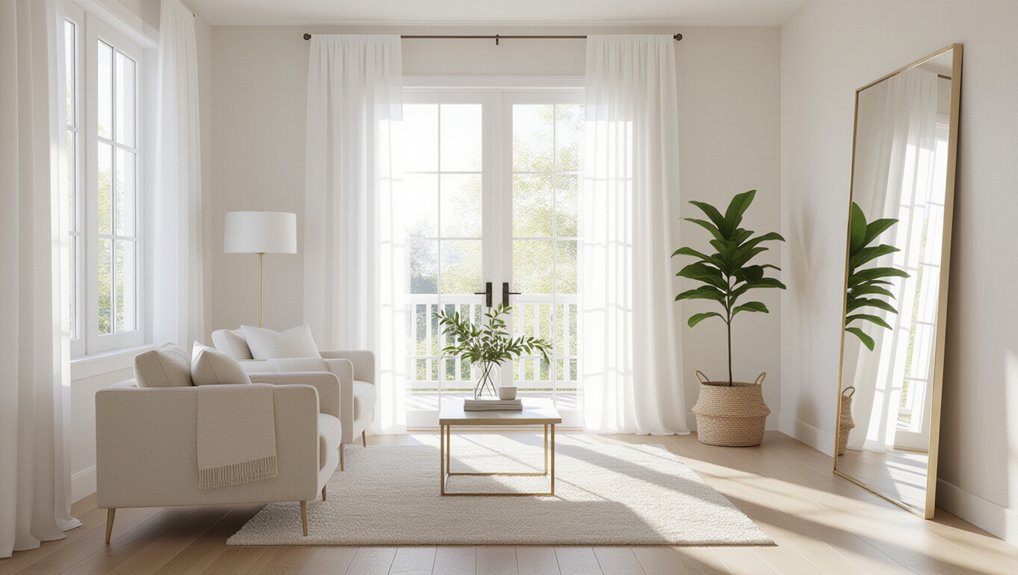
Natural light can make a room feel brighter and more spacious, so keep windows as unobstructed as possible. Move furniture away from the glass, and trim shrubs or branches outside that block daylight.
Choose window treatments that let you control privacy without sacrificing brightness: sheer curtains, adjustable blinds, or shades that pull fully out of the way work well. If you need heavier coverings for sleep or glare, use them only when necessary, and open them during the day.
Clean windows regularly, inside and out, to remove dust that can dull incoming light. Keep window sills clear, too, so sunlight can reach farther into the room.
When you arrange the space, preserve outdoor views where possible; a clear sightline connects your room to the landscape and helps it feel more open.
Use Mirrors to Reflect Light and Space
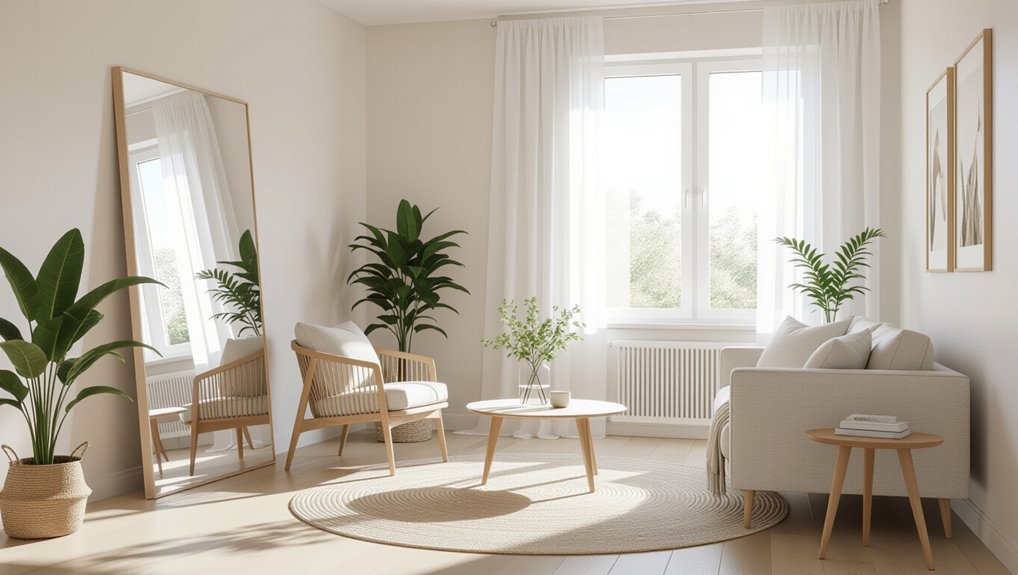
A well-placed mirror can bounce daylight deeper into a room and make its boundaries feel less defined. For effective mirror placement, hang one opposite or beside a window so it catches incoming light and reflects it across the space.
Check the view from your usual seating area: the mirror should reflect a bright window, an appealing feature, or open space, not clutter. In a narrow room, a large vertical mirror can suggest greater width, while a full-length mirror adds depth without taking up floor space.
Choose a frame that suits your decor, and secure heavier mirrors to wall studs or appropriate anchors. You can also pair a mirror with other reflective surfaces, such as glass tabletops, to spread light subtly.
Keep the glass clean; dust and smudges dull its reflection.
Layer Lighting to Brighten Dark Corners
Layered lighting helps you brighten shadowy corners without relying on a single overhead fixture.
Add task lighting, such as a desk lamp or adjustable reading light, where you need focused illumination.
Aim light toward dark areas to make the room feel more open and balanced.
Add Task Lighting
Task lighting can make a dim corner feel brighter without flooding the whole room with light. Choose a lamp or fixture for the activity you’ll do there, such as reading, sewing, or working. Aim its beam directly at the task to improve visibility and reduce eye strain.
For reading, place a lamp beside or slightly behind your chair, with the light falling onto the page rather than into your eyes. At a desk, use an adjustable lamp so you can direct light where you need it.
Task prioritization helps you decide which spots need focused illumination first. In your lighting design, combine task fixtures with ambient light, and choose bulbs with a suitable brightness and color temperature.
Add dimmers where possible, so you can adjust output as activities change.
Brighten Dark Corners
Dark corners can make a room feel smaller, but you don’t need to brighten the entire space to fix them. First, identify what blocks natural light, such as tall furniture or heavy curtains, and adjust the layout where possible.
Then layer lighting fixtures at different heights to spread light evenly. Place a floor lamp beside a chair, add a table lamp to a shadowed surface, or install a wall sconce where floor space is limited. Choose shades that direct light upward or outward, and use warm-white bulbs for a comfortable glow.
Reflective surfaces, including mirrors and pale finishes, can help bounce light into neglected areas. Coordinate your color schemes with the room’s overall palette: light-colored walls and accessories make each added source feel more effective without overwhelming the space.
Choose Light Colors to Make a Room Feel Bigger
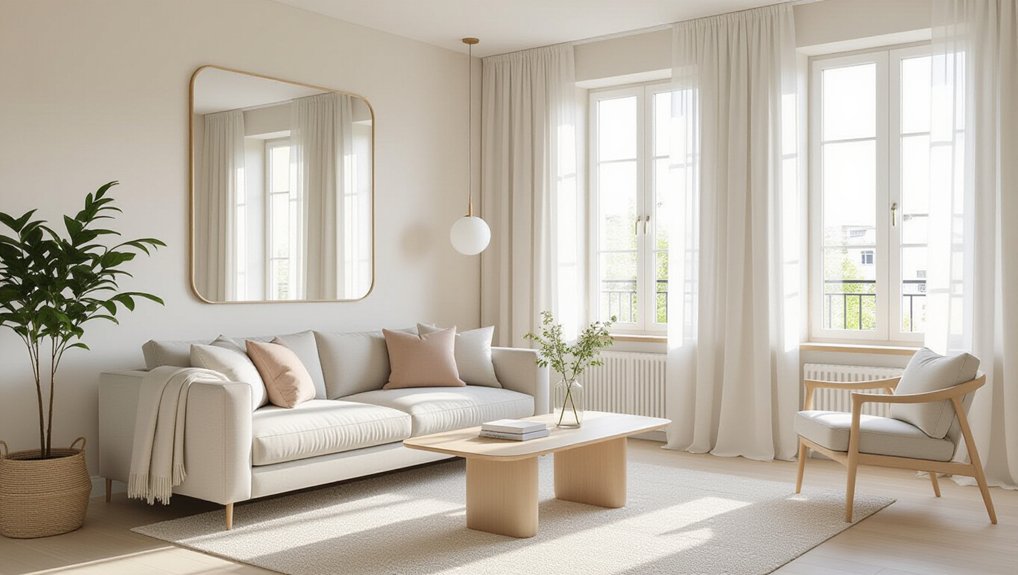
Light colors make a room feel larger by reflecting more light and reducing visual boundaries. Choose soft whites, pale grays, warm creams, or muted pastels for walls and ceilings.
Color psychology can help you set the mood: cool shades feel calm and expansive, while warm neutrals add comfort without making a room seem smaller. Test samples on different walls, then observe them in morning and evening light before committing.
Use consistent colors across adjoining walls to create a smoother visual flow. You can also paint trim and doors close to the wall color, which minimizes contrast and makes boundaries less noticeable.
Consider paint finishes carefully: eggshell or satin reflects more light than matte, but matte can hide surface flaws. Pick a finish that suits your room’s lighting, wall condition, and cleaning needs.
Keep darker accents limited so they don’t interrupt the open effect.
Pick Airy Rugs and Curtains for an Open Feel
Choose rugs and curtains that let light and sightlines flow through the room. Select airy rugs in pale, low-contrast shades to define seating areas without making the floor feel crowded. A flat weave or subtle pattern keeps the surface visually calm, while a rug sized to fit beneath key furniture creates cohesion. Avoid thick, dark designs that can weigh down a small room.
Hang breezy curtains high and wide so your windows appear larger and daylight reaches farther inside. Choose lightweight fabrics, such as linen or cotton voile, that soften the view without blocking it. Keep panels close to the wall color for an uninterrupted look, and use simple rods with minimal hardware.
If privacy matters, layer sheer curtains with discreet blinds. Together, these choices preserve openness while adding comfort and texture.
Conclusion
You don’t need a major renovation to make a room feel brighter and more spacious. Start by clearing clutter, opening pathways, and letting natural light reach as far as possible. Then add mirrors, layered lighting, light colors, and airy fabrics to reinforce the effect. Think of each choice as a small window opening onto more space. Work through the changes one at a time, and you’ll create a room that feels lighter, more welcoming, and easier to enjoy every day.