
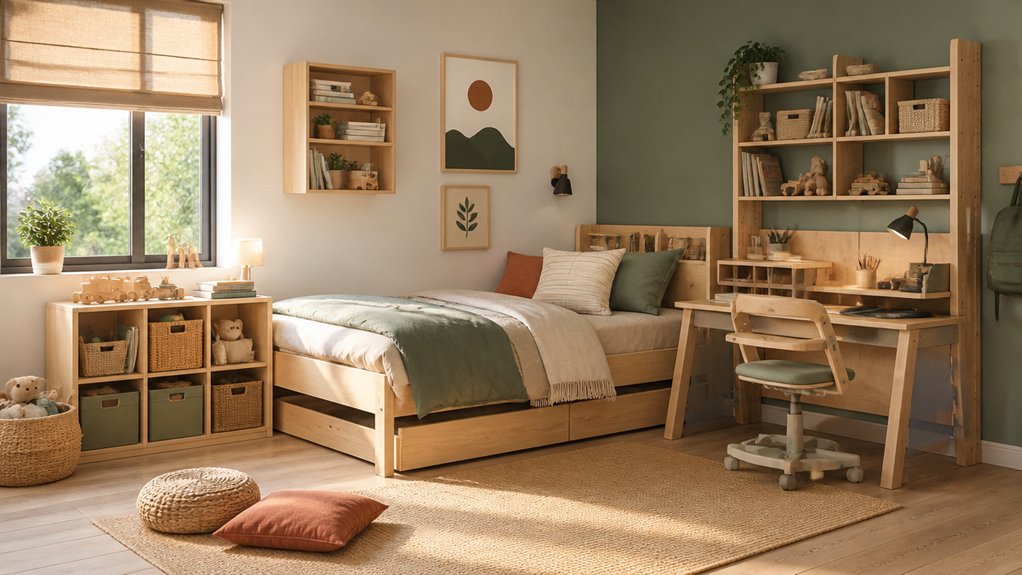

A child’s bedroom should handle changing routines, interests, and sizes without requiring a complete makeover every few years. You can make the room last longer with durable furniture, flexible storage, and finishes that work across different ages. A few thoughtful choices also help you balance comfort, safety, and independence. Start with the elements that are hardest to replace, then build in simple ways to update the space as your family’s needs change.
Choose Timeless Colors and Finishes
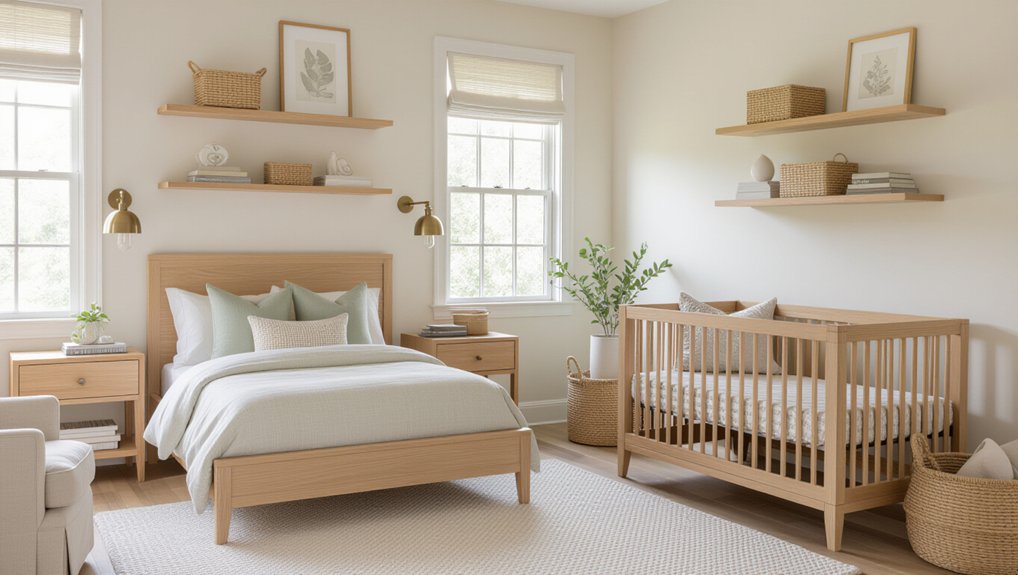
Choose a timeless color palette and durable finishes to keep your child’s bedroom appealing as their tastes change. Soft neutrals, muted greens, and warm blues create timeless palettes that work through different ages and interests. Use these shades on walls, flooring, and larger furniture, where frequent replacement would cost more.
Then add contrast with natural wood, simple hardware, and washable paint. These classic finishes look polished without feeling overly formal, and they stand up to everyday wear.
Before choosing paint, test samples in the room at different times of day; natural and artificial light can shift how colors appear. Check that flooring and furniture finishes are easy to clean and repair.
Add Personality With Easy Bedroom Updates
You can add personality without a major renovation by bringing in colorful accents. Display your child’s personal treasures to make the room feel uniquely theirs.
Swap out soft furnishings for an easy refresh as their tastes change.
Add Colorful Accents
Colorful accents can refresh your child’s bedroom without a major makeover. Choose a flexible base for walls and large furniture, then introduce brighter shades through bedding, curtains, rugs, or lampshades. These pieces are easy to replace as your child’s preferences change, so you won’t need to repaint or buy new furniture to update the room.
Use playful decor thoughtfully: repeat two or three colors to create a coordinated look, and balance bold patterns with solid fabrics. If you’re unsure which hues work together, start with a favorite color and pair it with a neutral plus one complementary shade.
Washable covers and durable materials make everyday upkeep simpler. You can also use removable wall decals for a temporary burst of color, keeping the room lively while preserving the option to change its style later.
Display Personal Treasures
Personal treasures can give a child’s bedroom character without a full redesign. Choose a few Personal mementos that reflect your child’s interests, such as a handmade card, a small collection, or a favorite drawing.
Grouping related items on a shelf creates a deliberate display instead of visual clutter. For sentimental keepsakes, use a shadow box or a lidded display case to protect delicate pieces while keeping them visible.
Place displays where your child can enjoy them, but secure shelves and heavier objects to the wall to reduce tipping risks. Leave some open space so new treasures can join the arrangement over time.
Invite your child to help select and arrange items; this gives them ownership and makes updates easy. Rotate pieces occasionally to highlight changing interests without buying new décor.
Swap Out Soft Furnishings
A quick change to soft furnishings can refresh a child’s bedroom without repainting or replacing furniture. Choose washable cushion covers in colors or patterns that reflect your child’s current interests. Cushion swapping lets you update the room as tastes change, while keeping the inserts for future designs. Check fabric labels and favor durable materials that can handle frequent washing.
Rugs add color, comfort, and definition to a play or reading area. Try rug layering by placing a smaller patterned rug over a larger, neutral one; secure both with nonslip pads to reduce trip hazards. Measure the space first, and keep doorways and furniture legs clear.
When you coordinate cushions and rugs through a shared color, the room feels considered without matching every item. Store off-season textiles in labeled bags, so you can rotate them easily and keep updates affordable. These simple changes give you flexibility as your child grows.
Choose a Bed That Grows With Your Child
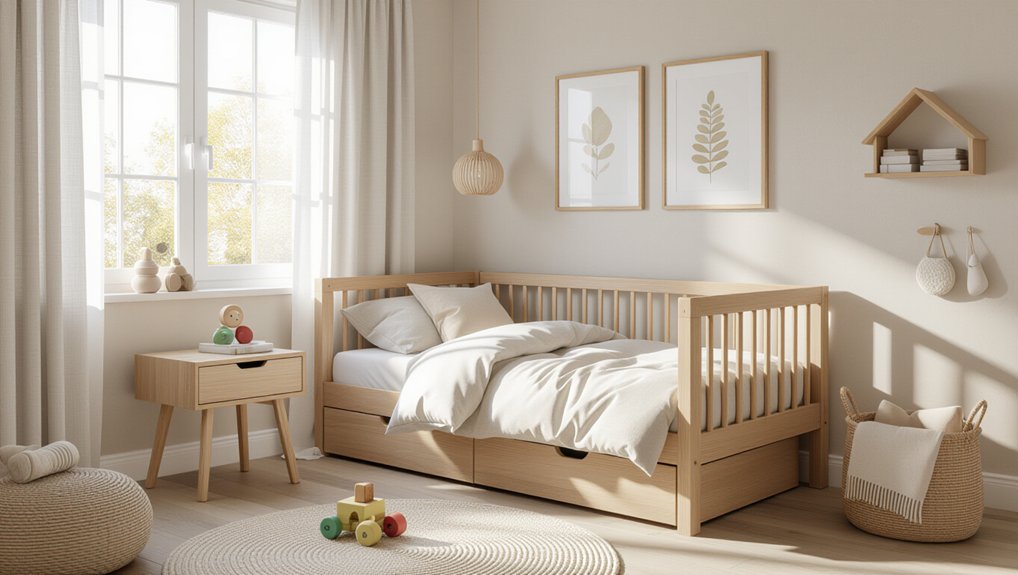
As your child grows, the right bed can adapt to changing needs without requiring a full bedroom overhaul. Choose a sturdy frame designed to adjust in length, convert from a toddler bed to a single, or separate into twin beds. This kind of Convertible furniture helps you extend the life of a key bedroom investment while keeping the room familiar.
Check the manufacturer’s age, weight, and safety guidance before buying, and confirm that conversion parts are included or available.
A low profile can make it easier for younger children to climb in and out; later, you can raise the frame if the design allows. Match the mattress size to each configuration, and use a growth mindset: plan for changing comfort and independence, not just today’s preferences.
Let your child help choose finishes or bedding.
Plan Storage for Every Age and Stage
Keep everyday items within your child’s reach so they can put things away independently.
Choose adjustable shelving that you can reconfigure as their needs change.
Leave room for larger clothes, books, and hobbies as they grow.
Accessible Everyday Storage
Plan storage around what your child can reach and use now, with room to adapt as they grow. Put daily essentials within easy reach, so your child can choose clothes, books, and toys without help.
Use low, stable bins for toy organization, and label them with words or pictures to make cleanup straightforward. Reserve higher storage for items you control, such as seasonal clothing or craft supplies.
For closet optimization, group outfits by type and keep a small selection of everyday options at your child’s height. Choose containers with handles your child can grip, and avoid heavy boxes or lids that pinch fingers.
As your child’s abilities change, adjust what goes where; don’t make access depend on adult assistance. A simple, consistent setup builds independence and keeps routines manageable for your whole family.
Flexible Shelving Systems
Choose adjustable shelving that can change with your child’s needs, from picture books and toys to school supplies and display items. Position frequently used items on reachable shelves, and reserve higher levels for keepsakes or supplies you supervise. Adjustable fixtures let you reposition shelves as books, containers, and projects vary in size.
Before installation, measure the wall and check the manufacturer’s load limits. Secure the system to wall studs or use suitable anchors to prevent tipping, especially in a child’s room.
Modular units make it easier to organize distinct categories without crowding one shelf. Add bins for small pieces, open sections for books, and a clear surface for rotating displays. Label containers with words or pictures so your child can find and return items independently. Keep the arrangement simple, stable, and easy to maintain. You’ll make storage useful at every age and stage.
Room To Grow
As your child grows, storage needs shift from toy bins and picture books to clothing, schoolwork, hobbies, and personal keepsakes. Plan for those changes before you buy furniture. Choose adjustable shelves, drawers, and hanging rails you can reposition as needs evolve. Low bins help toddlers put toys away independently, while labeled containers keep small pieces organized.
When selecting toddler furniture, favor sturdy pieces with accessible storage and secure wall anchoring. Later, add a desk, book storage, and dedicated space for sports gear or creative supplies without replacing the whole room.
Let nursery themes guide colors and decor, not fixed storage choices. Neutral, durable furniture adapts more easily when interests change. Reserve a few shelves for current favorites and keep seasonal items in labeled, reachable containers.
Review the layout each year, removing outgrown belongings and making room for new routines.
Create a Study Area That Adapts
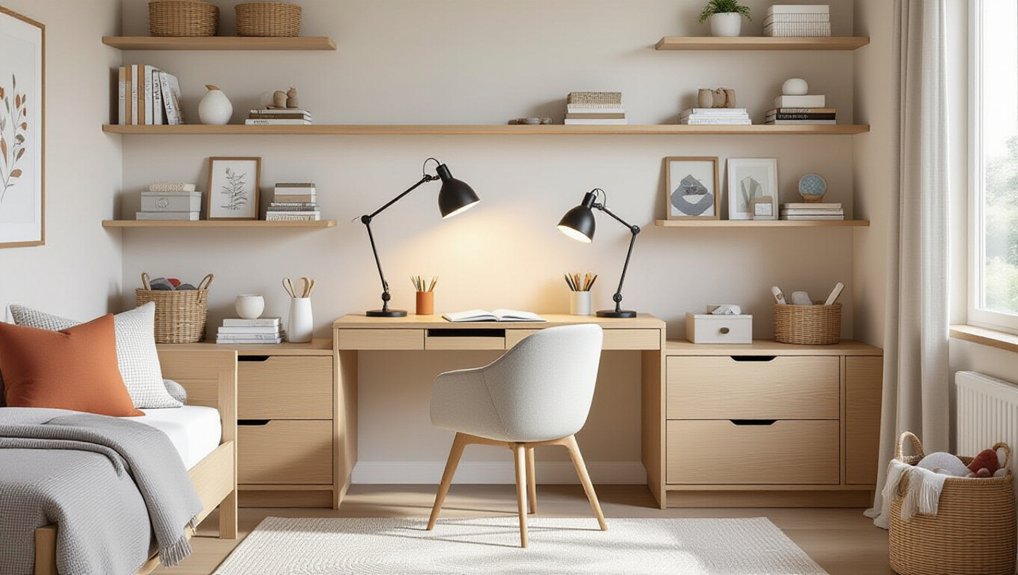
A study area should support your child’s needs now and adjust as those needs change. Choose Adaptive furniture, such as a desk with adjustable height and a chair that fits properly, so you can update the setup as your child grows.
Prioritize a sturdy work surface with enough room for books, a laptop, and current projects. Add drawers, shelves, or labeled bins to keep supplies accessible without crowding the desktop.
Plan the area around your room’s layout, leaving clear space to move and reposition furniture when routines shift.
Sustainable materials, including solid wood and durable recycled components, can help you select pieces that last through changing tastes and school stages.
Keep frequently used items within reach, and review the setup each year. Small adjustments can maintain comfort, organization, and independence without requiring a complete redesign.
Layer Lighting for Sleep, Study, and Play
Layer lighting to support different activities without overwhelming the room. Start with a ceiling fixture that provides even, general illumination, then add focused light where your child reads or completes homework. A desk lamp with an adjustable arm directs light onto the page and helps reduce eye strain; position it opposite your child’s writing hand to limit shadows.
For play, choose bright, comfortable light that makes toys and details easy to see. At bedtime, switch to a dimmable bedside lamp or warm-toned night-light. Keep controls within your child’s reach so they can manage nighttime routines with growing independence.
Use separate switches or smart controls to adjust each layer. Avoid harsh glare and exposed bulbs, and make sure cords stay secured. These choices create a flexible sleep environment without sacrificing useful task lighting.
Design Play Zones With Room to Change
Give play a defined zone without fixing the room around one activity. Place a low shelf or storage bench near the open floor area so your child can reach toys and put them away independently.
Choose playful furniture that serves more than one purpose, such as a table for crafts that also works for puzzles and games.
Keep the center of the room clear, and use a washable rug to mark the play area without adding permanent barriers.
Store small toys in labeled bins, and leave a few empty so the setup can adapt as interests change.
Add colorful accessories through cushions, artwork, or a play tent; these bring energy without locking you into a theme.
As your child grows, flexible zones let you rearrange activities while keeping the room easy to use.
Refresh Your Child’s Room Without Starting Over
Flexible play zones make it easier to update your child’s room as their needs change. Refresh the space by swapping out small, flexible details rather than replacing everything. New bedding, washable rugs, artwork, and storage bins can reflect changing interests without disrupting a layout that already works.
Reposition shelves and desks to support new routines, but keep frequently used items within your child’s reach.
Parent involvement helps you choose updates that match your child’s age, preferences, and daily habits. Ask what feels useful, then set a clear budget and prioritize durable pieces.
Safety considerations matter with every change: anchor tall furniture, secure cords, and keep pathways clear. Check that new accessories suit your child’s age and won’t create choking, tipping, or tripping hazards.
A few thoughtful adjustments can keep the room comfortable, functional, and ready for what comes next.
Conclusion
A child’s room doesn’t need a complete makeover at every milestone. Choose lasting colors, adaptable furniture, flexible storage, and lighting that serves changing routines. Add personality with easy updates, and leave space for play, study, and rest. As your child grows, adjust what you have instead of replacing everything. You’ll save money, reduce waste, and support independence. Plan for change, welcome new interests, and create a room that grows alongside your family—one thoughtful choice at a time.