
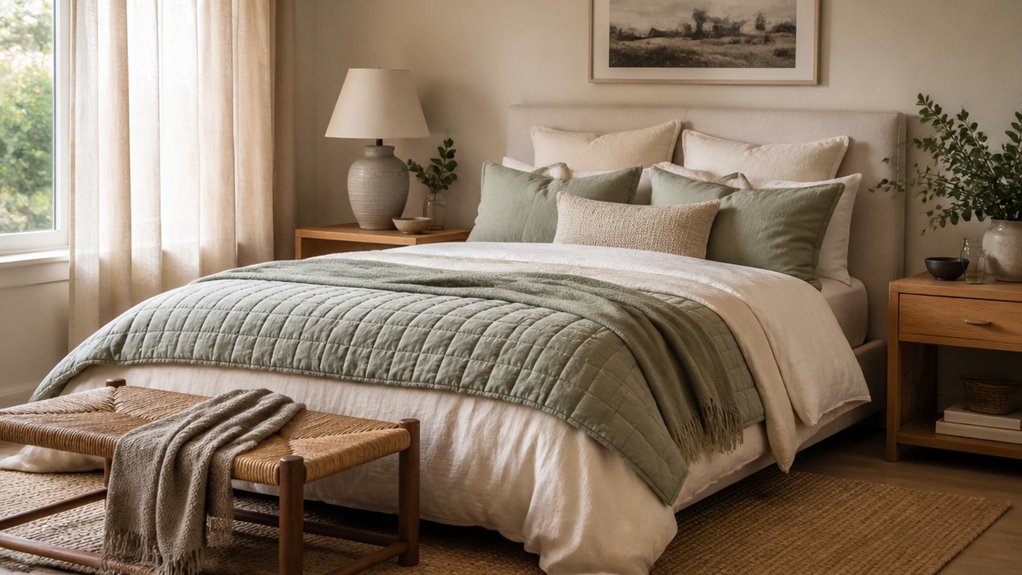

A more relaxing bedroom doesn’t require a full renovation; a few thoughtful upgrades can make the space easier to use and more comfortable. Start with furniture placement and storage, then consider how color, lighting, and bedding affect your rest. Small changes can also add warmth without making the room feel crowded. The best improvements depend on what’s disrupting your comfort now—and where to begin.
Arrange Bedroom Furniture for Easier Rest
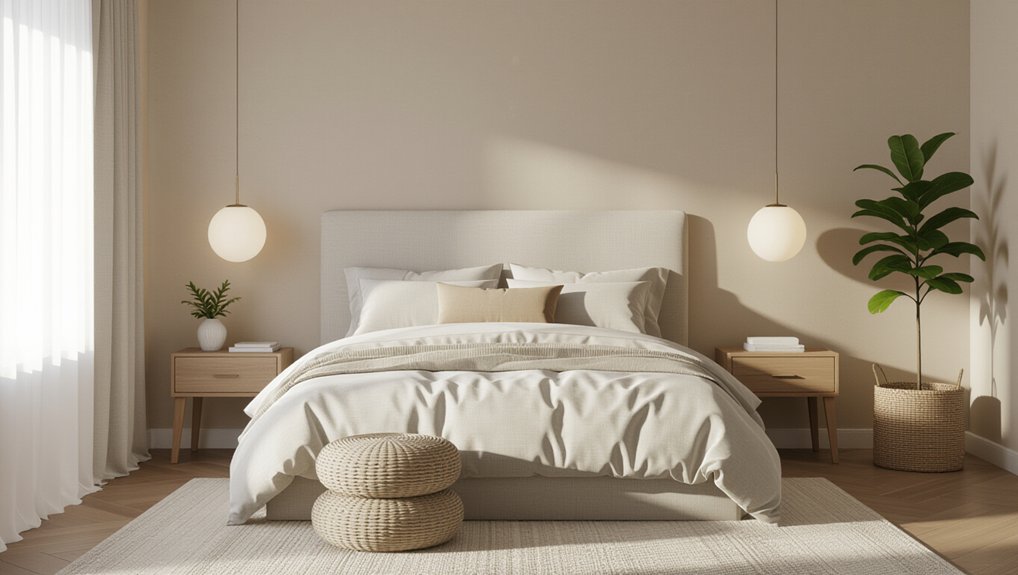
Arrange your bedroom furniture to make rest easier by keeping the bed accessible and the room uncluttered. Position it where you can get in and out from both sides, if space allows, and avoid placing it directly in line with the doorway. These feng shui principles can help your layout feel balanced, while clear paths make nighttime movement safer.
Choose ergonomic furniture that suits your needs and the room’s proportions. Place nightstands within easy reach so you can set down essentials without stretching. Keep lamps near the bed for convenient reading, and angle seating toward natural light if you use a chair for relaxation.
Check that drawers and doors open fully without blocking walkways. Before settling on a layout, test how you move through the room and adjust furniture to support comfortable, uninterrupted rest.
Clear Bedroom Clutter With Smarter Storage
Once your furniture layout supports easy movement, clear clutter with storage that keeps everyday items within reach. Start by sorting belongings into keep, relocate, donate, and discard groups. This step shows you what needs a home and prevents you from organizing items you no longer use.
Choose Smart storage solutions that fit your room and routines. Use under-bed drawers for seasonal clothing, a bedside table with enclosed compartments for small essentials, and closet dividers to separate accessories. Add hooks behind a door for bags or robes, and use labeled boxes on high shelves for items you need less often.
Keep frequently used belongings accessible, but store extras out of sight. Return items to their designated spots each day; consistent habits make clutter free organization easier to maintain. Avoid filling every container, so you can put things away without effort.
Choose Calming Colors for Your Bedroom
Choose colors that help your bedroom feel restful and comfortable. Color psychology can guide your decisions, but your personal response matters most.
If soft blues, muted greens, or warm neutrals help you unwind, consider them for walls and larger furnishings. These shades often feel quieter than highly saturated reds or bright yellows.
Test paint color choices before committing. Apply sample patches to different walls, then observe them throughout the day and against your bedding and furniture.
Choose a consistent palette of two or three complementary tones to keep the room cohesive without making it feel flat. Use a deeper shade sparingly on an accent wall or in small details if you want contrast.
You’ll create a more settled atmosphere by selecting colors that suit your preferences and the room’s existing finishes.
Layer Soft, Adjustable Bedroom Lighting
Choose soft, warm bulbs to create a restful glow in your bedroom.
Add adjustable lamps so you can direct light where you need it.
Use separate light sources to match the room’s brightness to each activity.
Choose Soft Bulbs
Soft, adjustable lighting makes your bedroom easier to unwind in and use throughout the day. Choose bulbs with a warm color temperature, around 2,700 kelvins, to create a calm evening atmosphere without making colors look dull.
For reading or getting dressed, select bulbs with enough brightness, measured in lumens, while avoiding harsh glare. Dimmable bulbs let you lower the light before bed, but check that they’re compatible with your switches or controls.
Smart bulb features can include schedules, app-based dimming, and adjustable color temperature, giving you control without adding complicated routines.
Compare bulb labels for brightness, color, and lifespan before buying. Energy efficient lighting, such as LED bulbs, uses less electricity and lasts longer than traditional options.
Replace bulbs in matching fixtures with consistent color temperatures for a balanced, comfortable room.
Add Adjustable Lamps
Adjustable lamps give you focused light for reading, dressing, or winding down without relying on a single overhead fixture. Place bedside lamps within easy reach, then angle their shades so light falls where you need it without shining directly into your eyes.
Choose models with flexible arms or swivel heads to redirect the beam as your routine changes.
For greater control, look for dimmable lighting or pair compatible lamps with dimmer switches. Use brighter settings for tasks and lower levels to ease into sleep.
Keep the lamp’s scale in proportion to your nightstand, and check that its base feels stable before adjusting the arm.
If you share a bed, position each lamp to limit glare for your partner. A warm bulb and a reachable switch make the setup more comfortable and convenient.
Upgrade Your Bedding for Better Comfort
Because you spend hours in bed each night, upgrading your bedding can make a noticeable difference in comfort. Start with sheets that suit your climate and preferences. Breathable cotton or linen helps you stay cool, while a warmer weave may feel better in a chilly room. Choose luxury linens for a smooth, durable finish, but check the fabric and care instructions before buying.
Next, assess your mattress and pillows. A supportive mattress should keep your spine aligned without creating pressure points. Replace worn pillows, and select ergonomic pillows that support your usual sleep position.
Side sleepers often need a higher loft, while back sleepers may prefer a lower profile. Wash bedding regularly, follow care labels, and rotate pillows when appropriate. These simple choices can improve comfort and support restful sleep.
Add Cozy Throws and Rugs Without Clutter
Add a throw at the foot of the bed or over a chair to bring warmth and texture without crowding the room. Choose a lightweight style that complements your bedding, and fold it neatly when you’re not using it.
For texture layering, combine one soft throw with smooth sheets rather than piling on several bulky fabrics. Keep color coordination simple: repeat a shade from your curtains, pillows, or artwork to create a unified look.
A rug can soften footsteps and define the bed area, but size and placement matter. Choose one large rug that extends beyond the bed, or place a pair of runners along its sides.
Leave clear floor space around furniture so the room feels open. Before buying, measure the area and check that doors can swing freely over the rug. Limit patterns to avoid visual clutter.
Conclusion
Your bedroom doesn’t need to resemble a luxury hotel; it just needs to stop behaving like a storage unit with a mattress. Arrange furniture for easy movement, clear clutter, choose calming colors, and layer warm, adjustable lighting. Upgrade your bedding, then add a throw or rug where it earns its keep. These changes won’t solve every problem—your laundry may still stage a coup—but they can make rest easier. Build a room that supports sleep, not one more thing demanding your attention.