
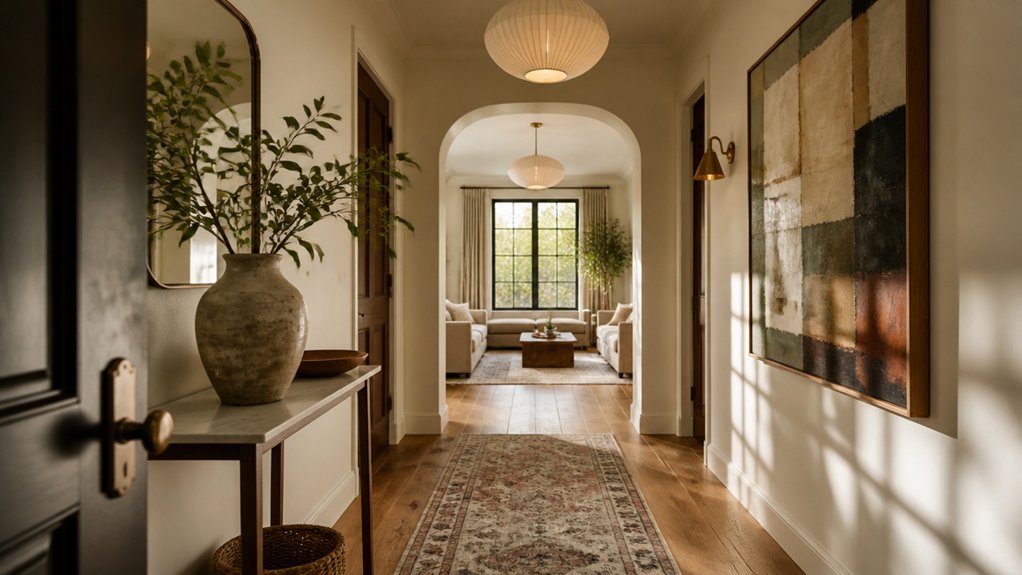

Does your hallway really set the tone for the rest of your home? It does: as the first space you enter, it can make the rooms beyond feel connected, considered, and welcoming—or leave them feeling disjointed. You don’t need a major renovation to get it right. A few deliberate choices in lighting, color, storage, and decor can transform the space, but one common design mistake can undermine the whole effect.
Plan a Welcoming Hallway Makeover
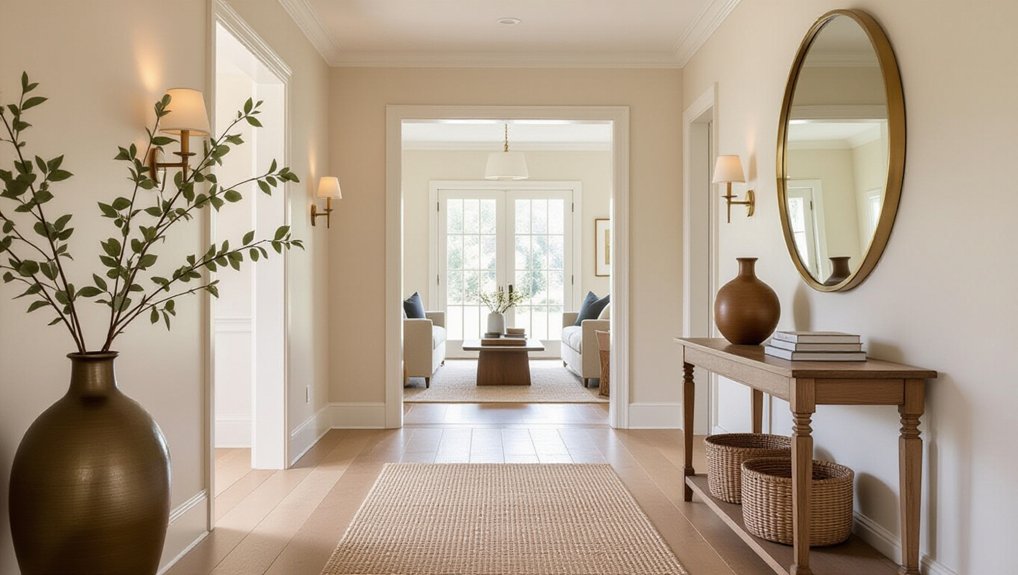
A welcoming hallway starts with a clear plan: measure the space, note where people enter and pass through, and identify what feels cramped, dark, or cluttered.
Then set priorities: durable finishes, useful storage, comfortable lighting, and a palette that connects with adjoining rooms.
Choose entrance matting that traps dirt without interrupting the floor’s visual flow, and check hallway ventilation to prevent stale air and lingering dampness.
Assess existing doors, switches, and outlets before selecting furniture or fixtures; clearances matter as much as appearance.
Use a simple sketch to map each element, including hooks, a bench, or a mirror, and confirm that daily routines will work.
Set a realistic budget, allowing for installation and unexpected repairs.
With these decisions made, you can create a cohesive entry that feels intentional, functions smoothly, and welcomes guests from the moment they arrive.
Make a Small Hallway Feel More Spacious
Once your hallway plan is in place, use light, sightlines, and slim furnishings to make a narrow space feel more open. Choose a pale, consistent wall color to reflect daylight and reduce visual breaks.
If natural light is limited, layer a flush ceiling fixture with discreet sconces; avoid bulky shades that crowd the passage. Hang wall-mounted mirrors opposite a light source to bounce brightness and extend the view, positioning them securely at eye level.
Keep the floor visible with a runner that leaves a border of exposed flooring on each side. In narrow corners, use a rounded console or a compact wall light to soften sharp angles without interrupting circulation.
Select furniture with raised legs and shallow profiles, and maintain a clear route from the entrance to adjoining rooms. A restrained palette keeps the hallway calm and expansive.
Add Smart Hallway Storage Without Clutter
Keep floor space clear by using vertical storage, such as slim shelves or wall-mounted cabinets.
Choose hooks that fold away or sit behind a cabinet door to keep coats and bags out of sight.
You’ll gain useful storage without making your hallway feel crowded.
Use Vertical Storage
How can you add storage to a narrow hallway without crowding the floor? Use the walls to keep essentials organized while preserving a clear path. Wall mounted shelves give you a place for mail, a small tray, or a few carefully chosen objects. Keep their depth modest, and position them where they won’t interrupt movement or sightlines.
For closed storage, choose slim vertical cabinets that fit between doorways or at the end of the hall. Their height makes use of overlooked wall space, while doors conceal everyday items and maintain a calm look. Before buying, measure the available width, depth, and clearance around doors. Match finishes to your trim or walls to help storage blend in.
Limit what you display; a restrained arrangement keeps the hallway useful, open, and visually composed.
Choose Hidden Hooks
Hidden hooks add a convenient place for coats, bags, and keys without making a narrow hallway feel crowded. Choose a rail with fold-down pegs or hooks that tuck flush when you’re not using them. Mount it at a height you can reach easily, and anchor it securely to a stud or suitable wall fixing.
Before drilling, check that open doors won’t strike hanging items.
Keep the arrangement intentional: assign each hook a purpose, such as everyday coats, a tote, or a dog leash. Limit what you hang there, and store seasonal extras elsewhere to preserve a calm entry.
For a polished look, match the hardware to your door handles or lighting. If you prefer a more expressive detail, use decorative hangers sparingly; hidden hooks should still blend into your hallway’s palette and lines.
Brighten Your Hallway With Layered Lighting
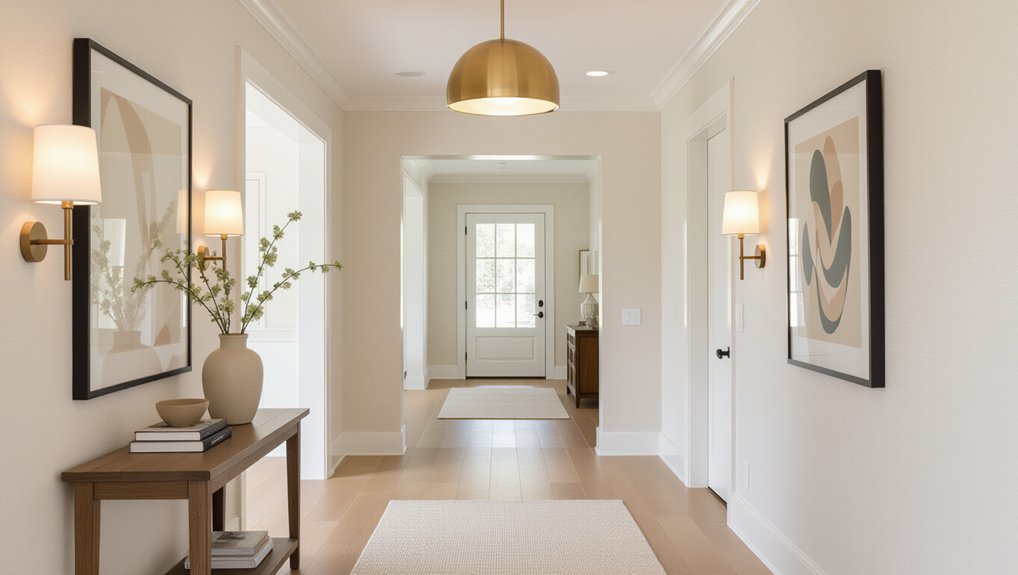
A single ceiling fixture can leave a hallway dim and flat, so layer ambient, task, and accent lighting to create a brighter, more welcoming passage. Start with flush-mounts or recessed fixtures for even ambient coverage, spacing them to eliminate dark gaps.
Add task lighting where you need it, such as a wall sconce beside a mirror or a lamp on a console. Use accent lights to highlight artwork or architectural details, and choose dimmers to adjust the mood and brightness throughout the day.
These Layered lighting techniques give you flexibility without crowding a narrow passage. For natural light integration, keep windows unobstructed and consider a glazed door or transom if your layout allows.
Select warm, consistent bulbs, and check that switches sit conveniently at each entrance.
Choose a Welcoming Hallway Color Palette
Choose warm neutrals to make your hallway feel inviting without overwhelming its narrow proportions.
Then add welcoming accents—such as a muted green, soft blue, or earthy terracotta—to bring depth and personality.
Keep the palette cohesive with nearby rooms so the progression feels intentional.
Choose Warm Neutrals
Warm neutrals make a hallway feel welcoming without overwhelming the space. Choose shades such as creamy white, soft beige, warm greige, or muted taupe to create a calm *link* between rooms.
Before you commit, test paint samples on more than one wall; daylight and artificial lighting can shift undertones, making a color appear pink, yellow, or gray.
Consider Color psychology when selecting a shade: gentle, earthy tones can make a narrow passage feel more relaxed and approachable.
Coordinate the walls with nearby flooring and trim so the palette flows naturally through your home.
In a high-traffic hallway, Material durability matters as much as appearance. Select a washable finish that resists scuffs, and choose a slightly deeper neutral if fingerprints or everyday wear are likely to show.
Add Welcoming Accents
To make a neutral hallway feel more inviting, add accents that echo colors in nearby rooms. Choose one or two hues from your living room art, kitchen textiles, or bedroom bedding, then repeat them with restraint. A muted blue runner or terracotta vase can create a clear connection without making the passage feel busy. Keep surfaces—walls, trim, and flooring—quiet so you’ll update color easily.
Use entryway decor to balance appearance with function: a framed print, a painted console, or a bowl in your chosen accent shade can welcome you home. Select hallway accessories in varied textures, such as ceramic, woven fiber, or brushed metal, to add depth without introducing more colors.
Check samples in the natural and evening light; undertones can shift noticeably.
Use Rugs and Flooring to Define Your Hallway
Rugs and flooring can give your hallway a clear visual boundary while adding comfort and protecting high-traffic surfaces. Choose Area rugs that fit the corridor without crowding doorways or creating trip hazards. A runner can guide movement through a long passage, while a smaller rug can soften a compact entry. Check that the backing grips the floor, or add a nonslip pad to keep the rug secure.
Your flooring materials also shape the hallway’s character and upkeep. Durable tile, sealed wood, or resilient vinyl can handle daily foot traffic; select a finish that complements nearby rooms for a cohesive transition.
If you’re updating the floor, consider how its color, pattern, and texture work with your rug. Keep both choices practical to clean, especially near exterior doors where dirt and moisture collect.
Create a Hallway Focal Point With Art or a Mirror
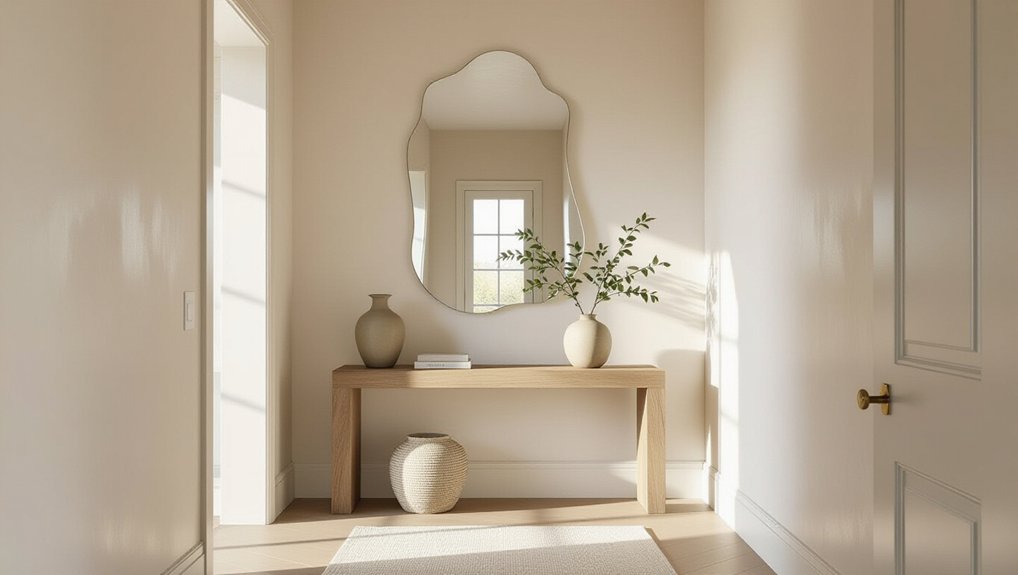
A well-placed artwork or mirror gives your hallway a focal point and draws the eye along the space. Choose a piece that suits the corridor’s scale: oversized art can anchor a wide wall, while a slim frame works better in a narrow passage. Hang it at eye level, and check that doors won’t strike it as they open.
Gallery walls add impact, but keep the arrangement cohesive with consistent spacing, a shared color palette, or matching frames. Before hanging, lay out the grouping on the floor to refine its balance.
Statement mirrors brighten dim hallways by reflecting available light and creating a sense of depth. Position one opposite a window or doorway when possible, and secure it with hardware rated for its weight. Let one focal point lead; too many competing pieces can make the passage feel cluttered.
Add Plants and Personal Touches to Your Hallway
Plants and personal objects can make a hallway feel welcoming without crowding the walkway. Choose indoor greenery that suits the light: a pothos can thrive in a brighter spot, while a low-light plant may work better farther from a window.
In a narrow passage, use a slim floor planter or place a small pot on a stable shelf, keeping doors and routes clear. Check plant size as it grows, and use a saucer to protect flooring.
Add personal decor with intention. A small bowl for keys, a framed family photo, or a meaningful travel keepsake can make the space feel lived-in. Limit the display to a few pieces, and group objects on a console or ledge to avoid visual clutter.
Keep fragile items out of reach of passing bags and coats.
Match Your Hallway to Your Home’s Style
Once you’ve chosen personal touches, tie the hallway’s finishes and decor to the rooms around it. Your entry should feel like a natural progression, not a separate design statement. Borrow one or two colors from nearby spaces, then use Color coordination to create a subtle thread through paint, rugs, or artwork.
Repeat materials, too: a wood tone from the living room or metal finish from the kitchen can make the passage feel connected.
Let your home’s architecture guide the details. Architectural details such as trim, door casings, and ceiling moldings can carry a consistent style from room to room.
In a traditional home, preserve their profiles and choose classic lighting; in a modern space, keep lines clean and hardware simple.
You don’t need to match everything. A restrained palette and a few repeated finishes provide cohesion while letting your hallway retain its own character.
Conclusion
Your hallway may be small, but it sets the stage for every room beyond it. Bring your makeover together with practical storage, layered lighting, a welcoming palette, and details that reflect your style. Keep the path clear, choose finishes that connect with nearby spaces, and let one focal point draw the eye. You don’t need a major renovation to make a lasting impression; thoughtful changes can go a long way toward making your whole home feel more inviting.